Crazy Facts about the Oceans - by Tomas Pueyo Fascinating Facts about the Oceans
Some content could not be imported from the original document. View content ↗
2023年3月9日
∙ Paid
Two weeks ago, I asked you whether you wanted me to share premium content outside of the paywall. Nearly 6 out of 7 of you thought I should.

It’s not unanimous though, and I want to be thoughtful of those of you who don’t want that either. So I will share some content outside of the paywall, but I’ll be very considerate on what I share. Also, most of you are interested in other ways to get value—for example, an audio version of the articles. I will be exploring that. I’m going to play with Youtube in the coming weeks. I’ve also been trying AI tools to convert my articles into podcasts, but so far it hasn’t worked. I’ll keep trying!
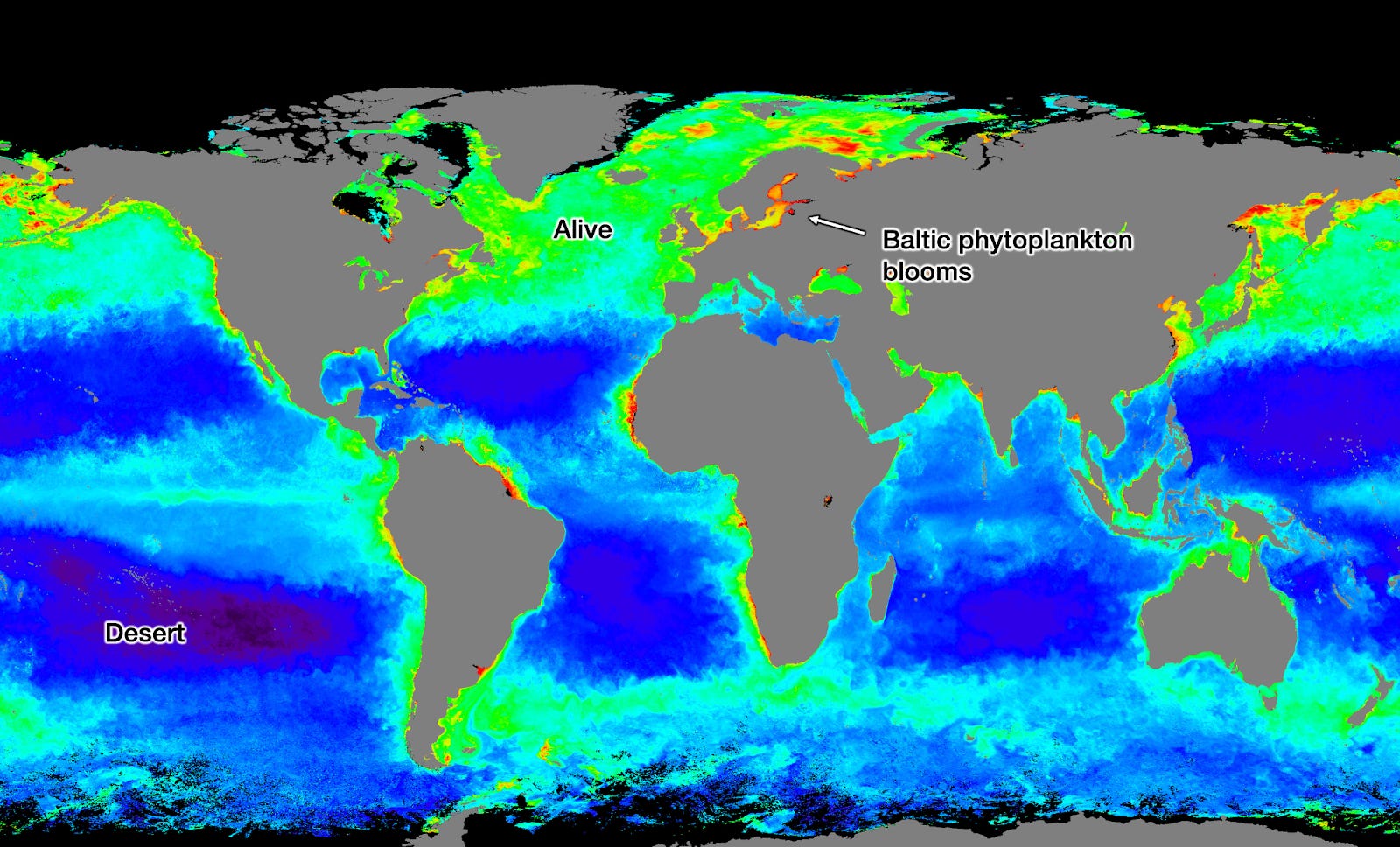
Why are tropical oceans dead but their coasts brimming with life?
Why are some spots on the Earth’s oceans especially full of life, while others completely void of it?
Does any expert disagree with these ideas, and what do they think?
Why is Peru a world center of fishing?
Why are some ancient ships conserved extremely well?
Why is South America rarely affected by hurricanes?
Why are there more carnivores in the ocean than on land?
We’ll answer these questions today!
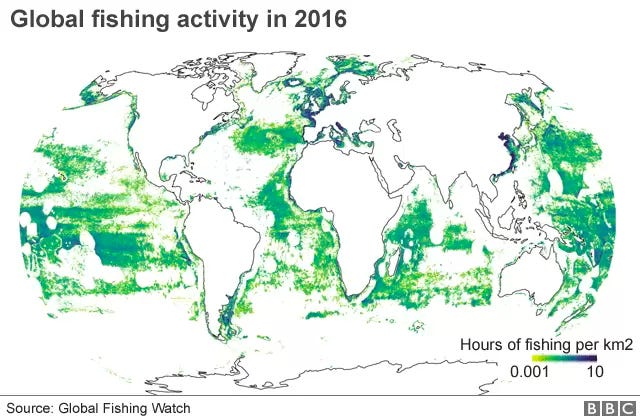
In this week’s article, we focused on the big dark blue (desert) and light green (alive) areas of this map:
But there’s so much more we can ask ourselves!
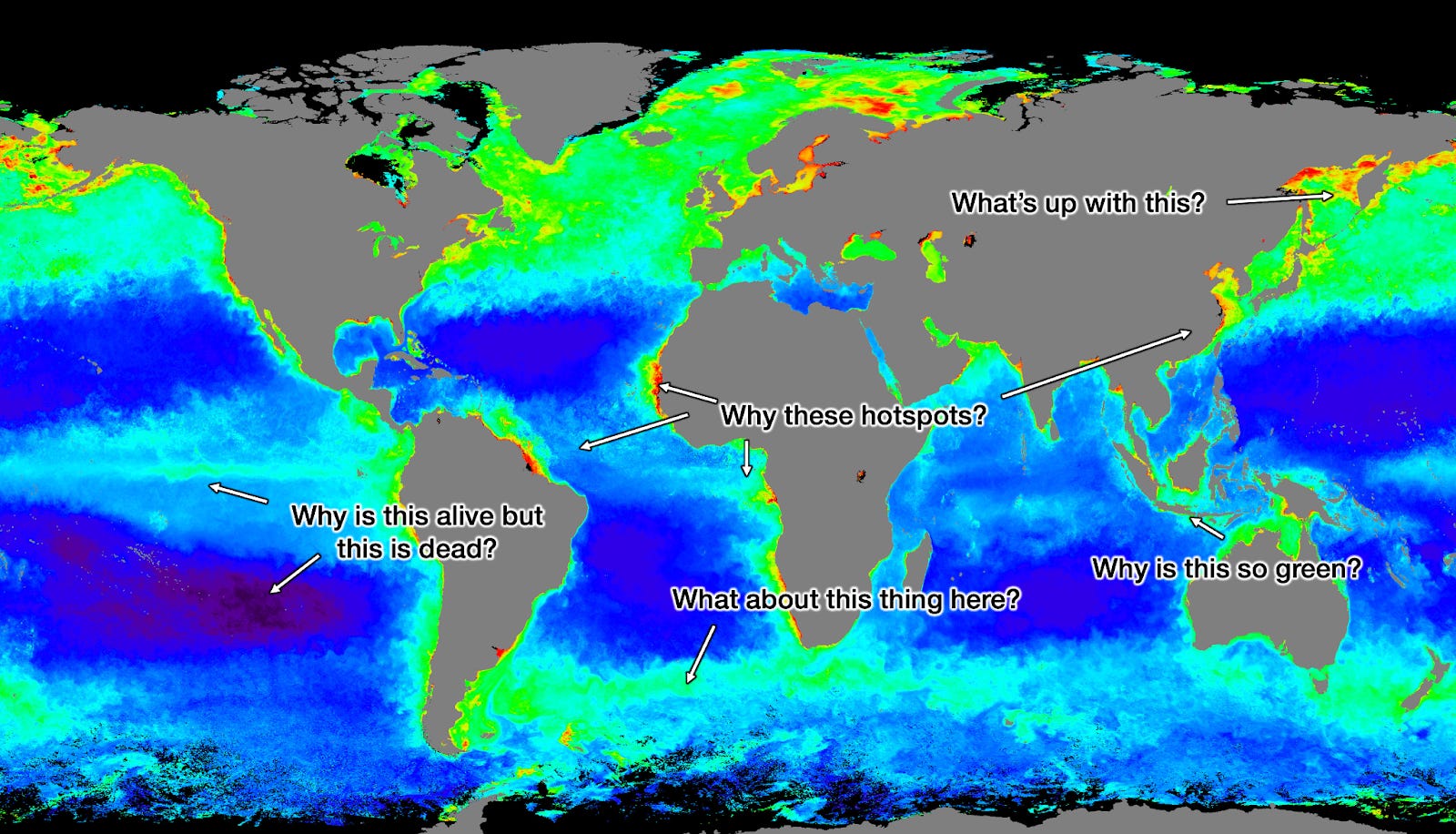
So let’s explain it all!
Where is Life in the Ocean
First, let’s explain this thing:
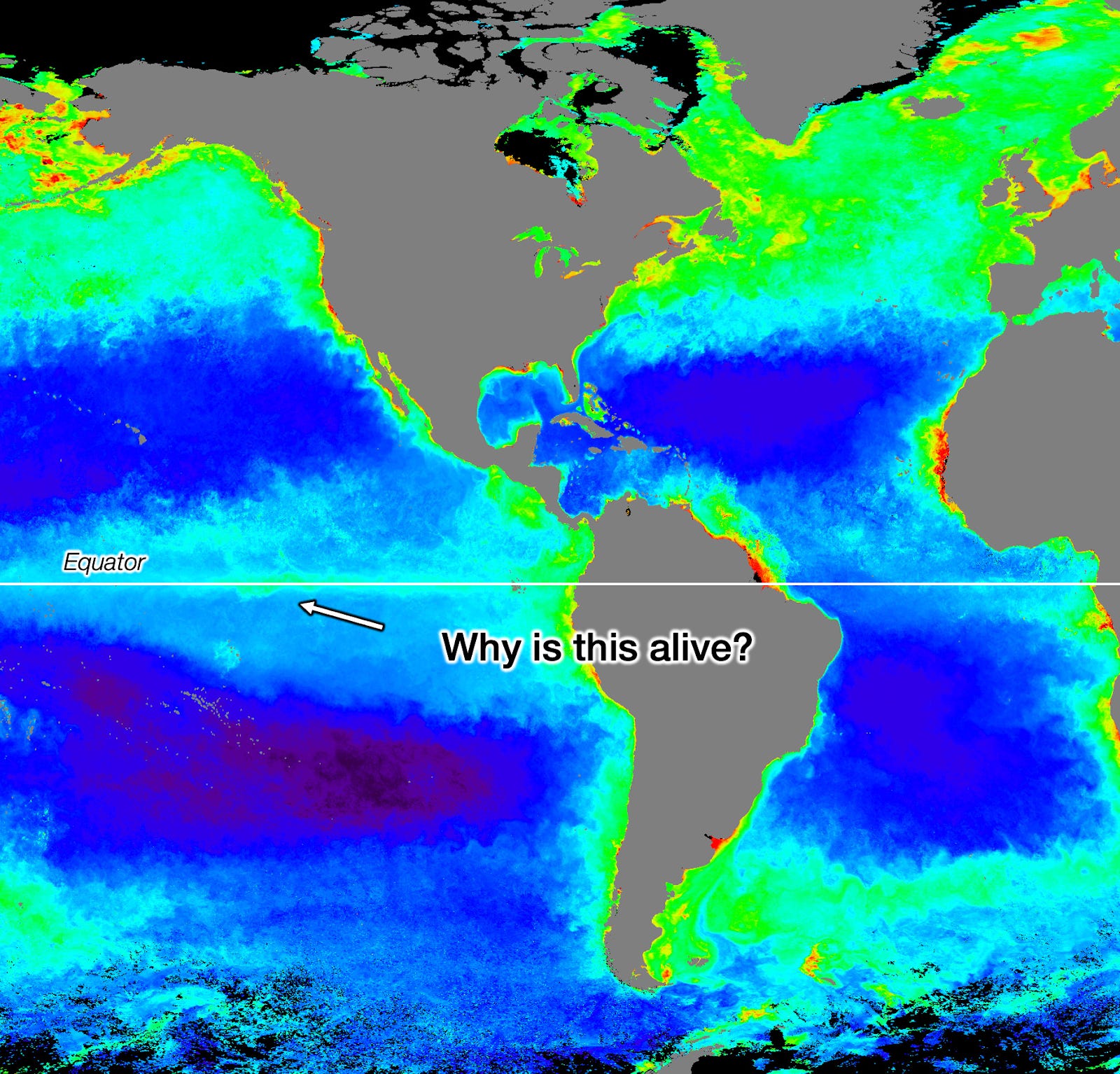
We said earlier this week that ocean waters near the equator are too hot—and hence light—so they don’t let bottom water rise with nutrients. So how come there’s so much life precisely around the equator that you can tell where it is just by looking at this map?! There must be a way for nutrients to rise there, right?
If you’ve followed our articles, you might have a guess at what this is: the Trade Winds!
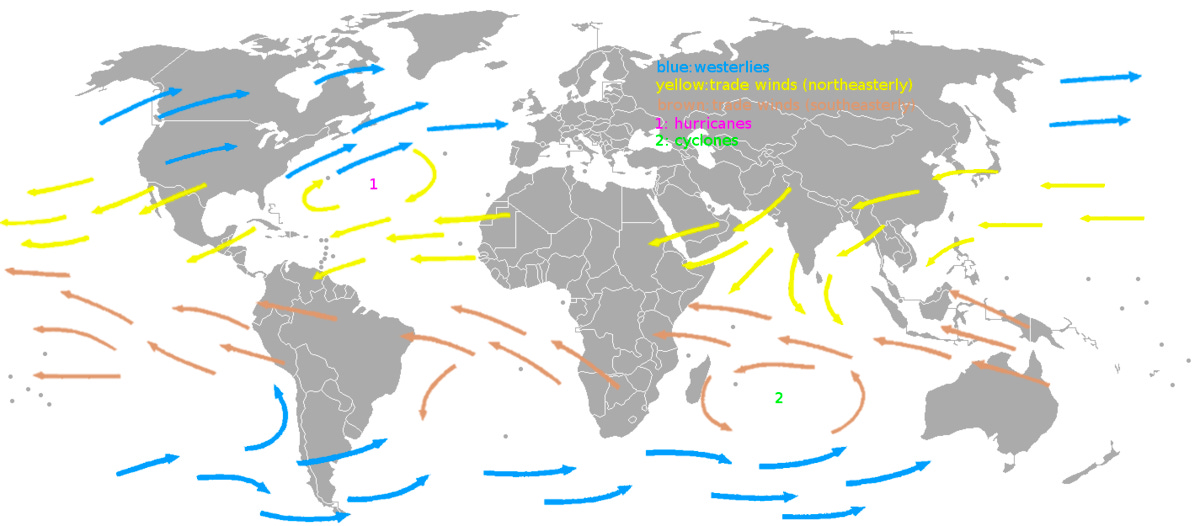
Winds go west around the equator [1] . So what happens when it hits the Pacific coast of America?
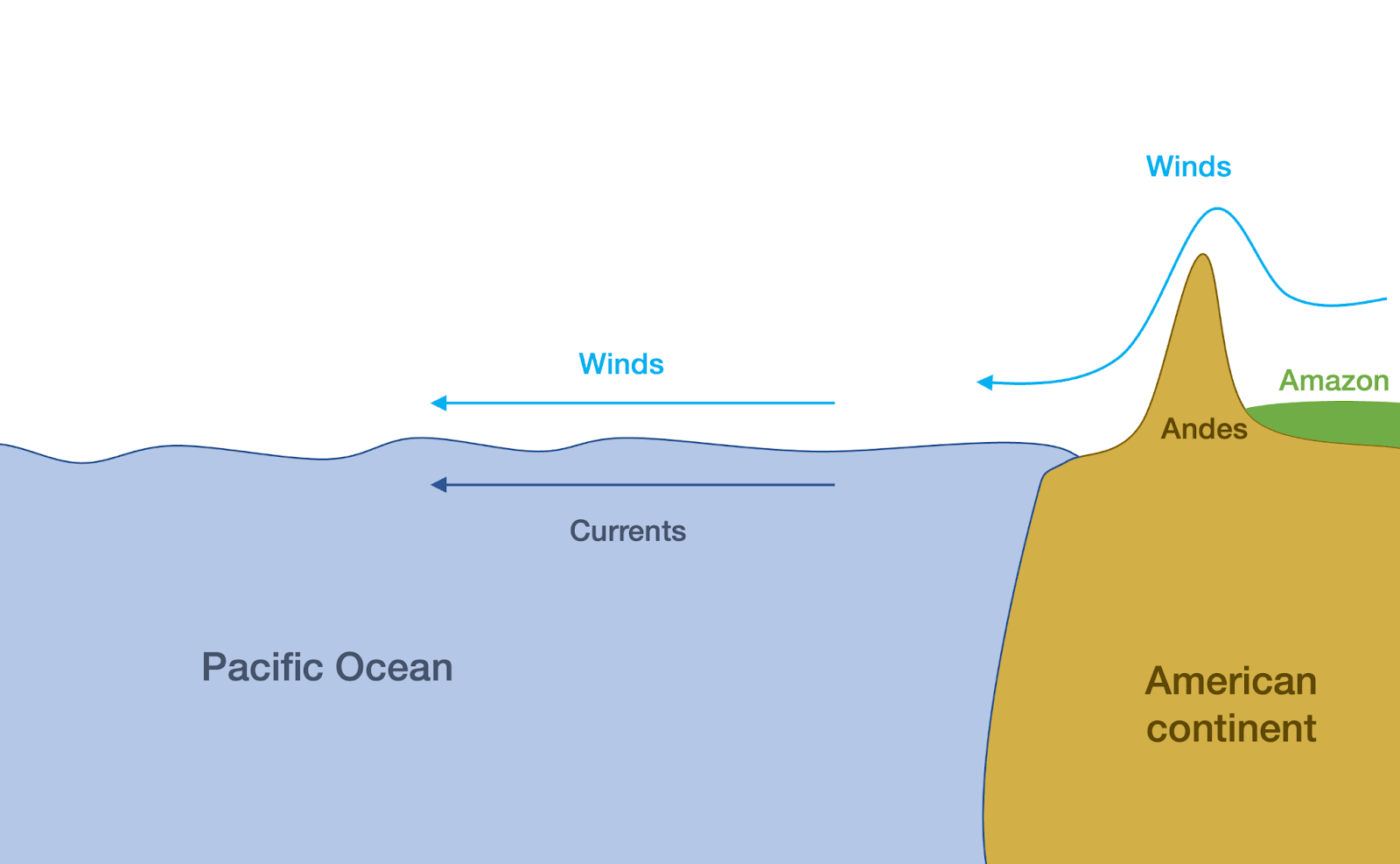
Winds going west are strongest around the Equator, so as they blow, they drag the water with them. This creates a current of water going west along with the wind. But where is the water close to the coast supposed to come from?
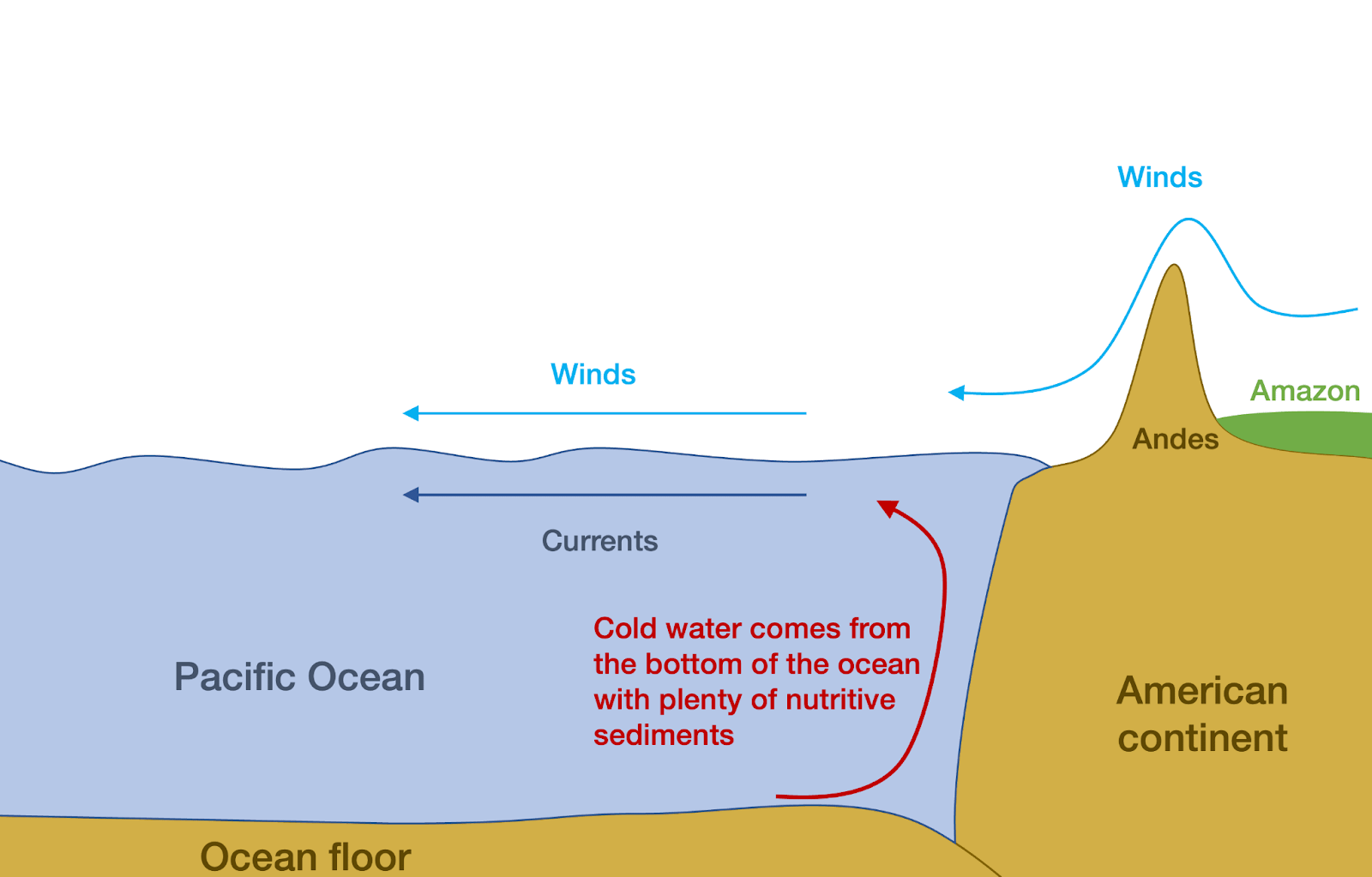
The currents at the top create a conveyor belt, lifting cold, nutrient-rich water from the bottom, making phytoplankton bloom, and the other animals follow.
This is why the Peruvian coast is one of the most productive for seafood in the world!
If you look at a map of sea temperatures, you can see that the west coast of both Africa and South America just away from the equator are colder than the rest of the coasts or ocean. This is due to that upswell of deep cold water.
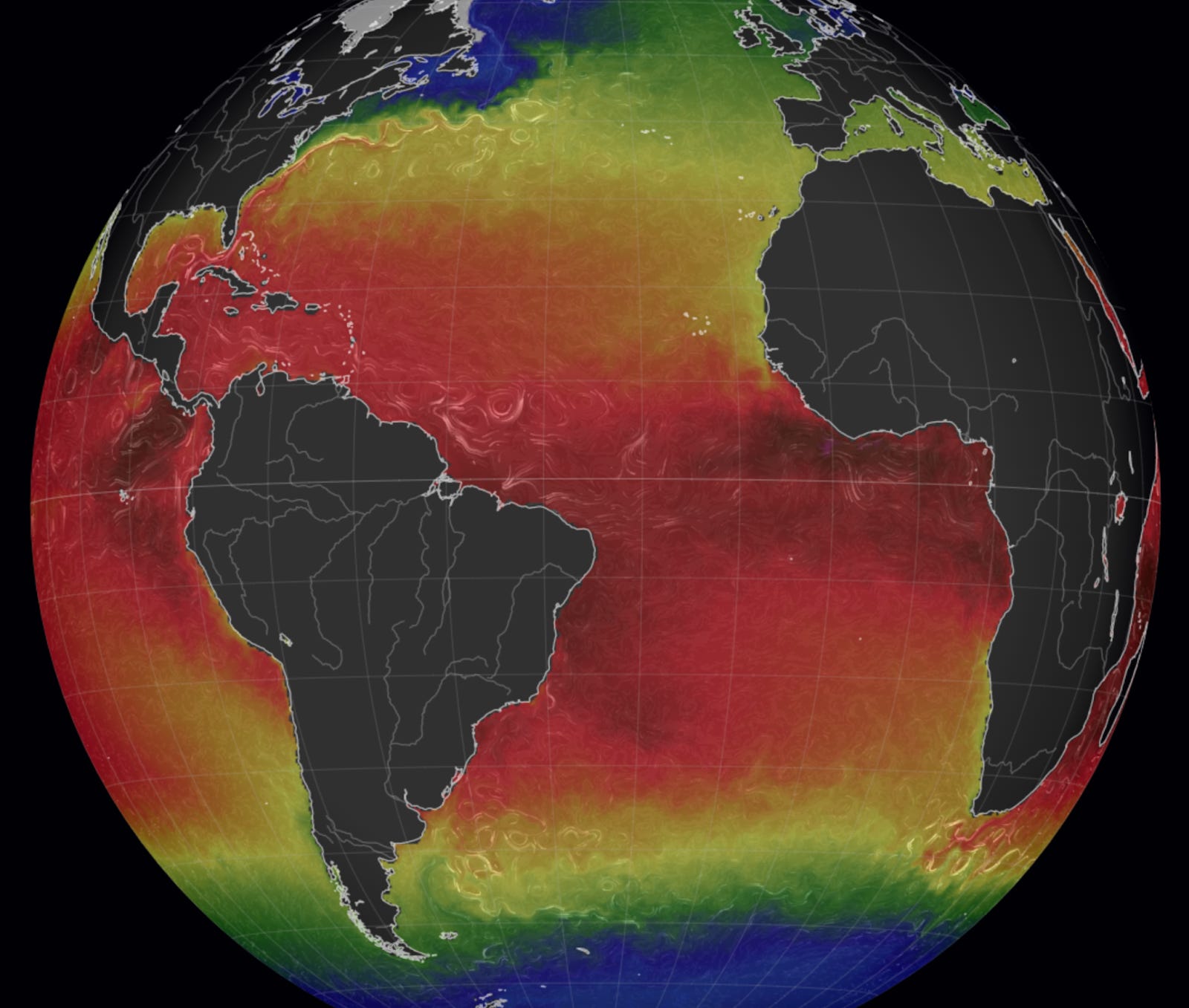
As we saw in the article about the Amazon, there’s also another factor in the Atlantic: Sediments coming from the Sahara. Half of them land on the Amazon rainforest, but the other half lands in the Atlantic, making it more fertile.
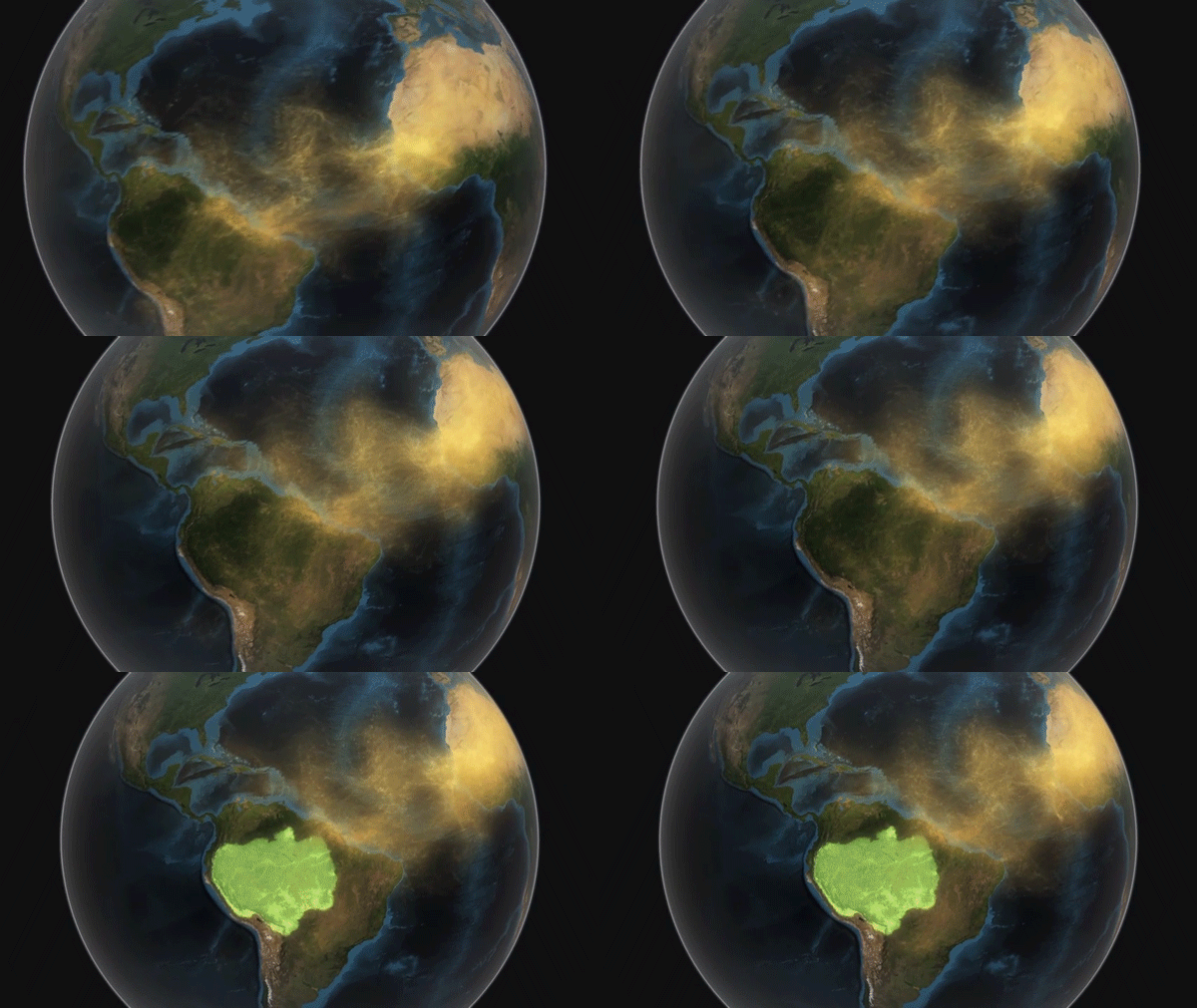
Now you understand why it’s the opposite when you go north and south:
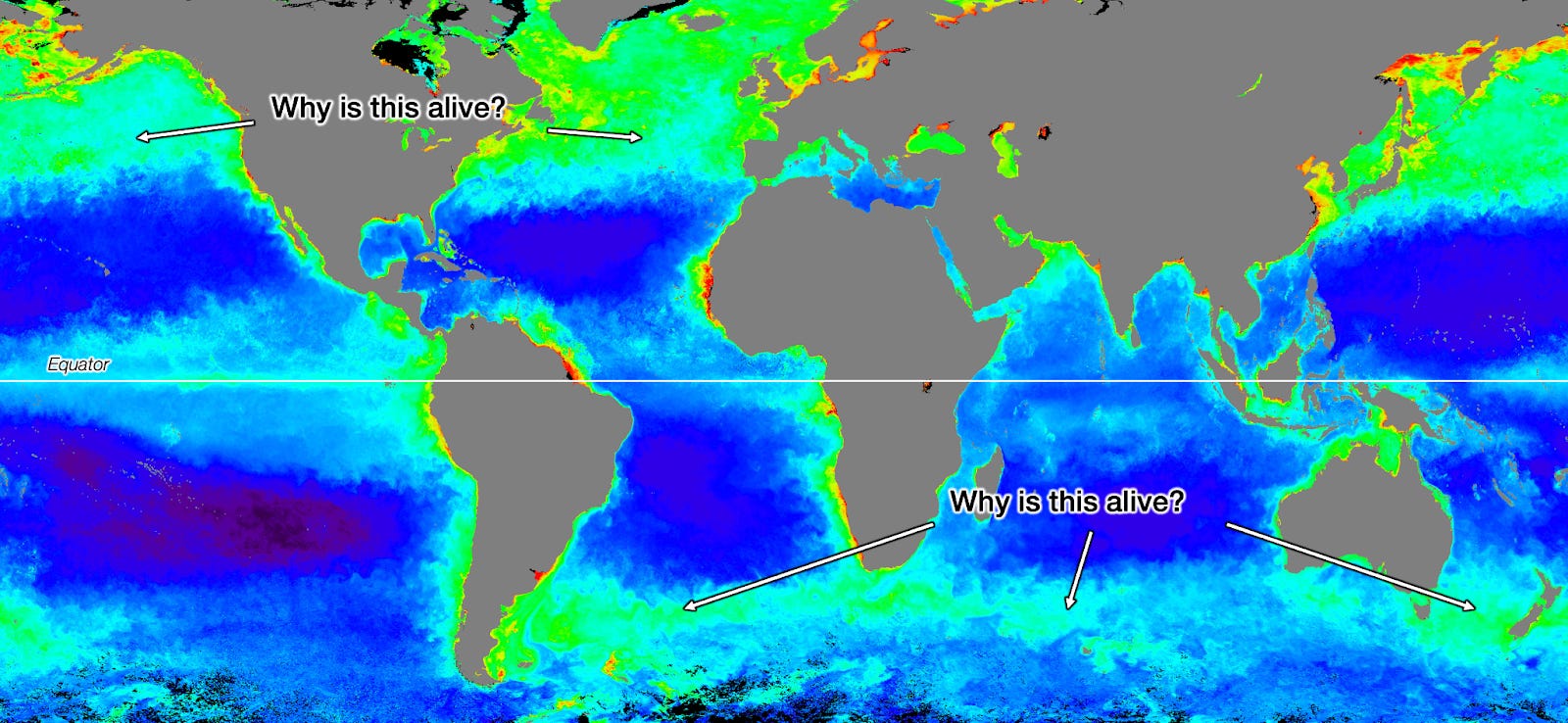
In these regions, winds blow from west to east because of the rotation of the Earth. The currents go in that direction too, bringing the sediments.
In the northern hemisphere, the oceans are stopped several times by continents, but much less in the southern hemisphere. The result is that there’s a highway of currents going from southern Argentina all the way past New Zealand, where it gets refreshed.
Why the Hotspots?
So now we understand:
Why west coasts around the equator are alive and have plenty of fishing: the upswell from deep cold water close to the coast.
Why east coasts in temperate regions are the equivalent.
How these nutrient-rich regions can stretch far from the land and into the ocean.
Now let’s understand this:
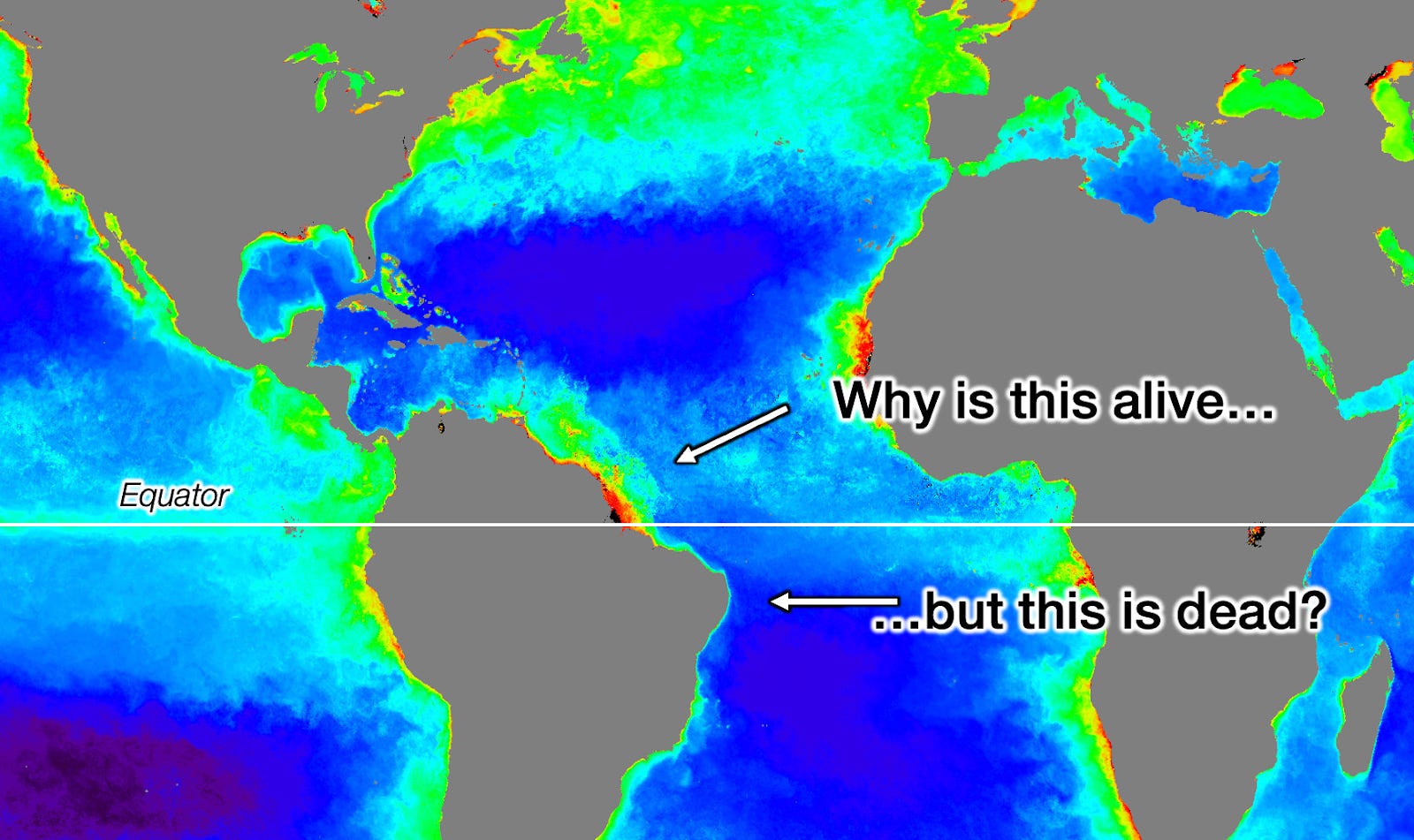
On both sides of the equator in Brazil, we should see the same thing happening, right? Water with exhausted nutrients should travel to the Brazilian coast, where it’s now hot, it hits the coast, and doesn’t go down (it’s hot so light), preventing the cold, deep, nutrient-rich waters from rising and creating life.
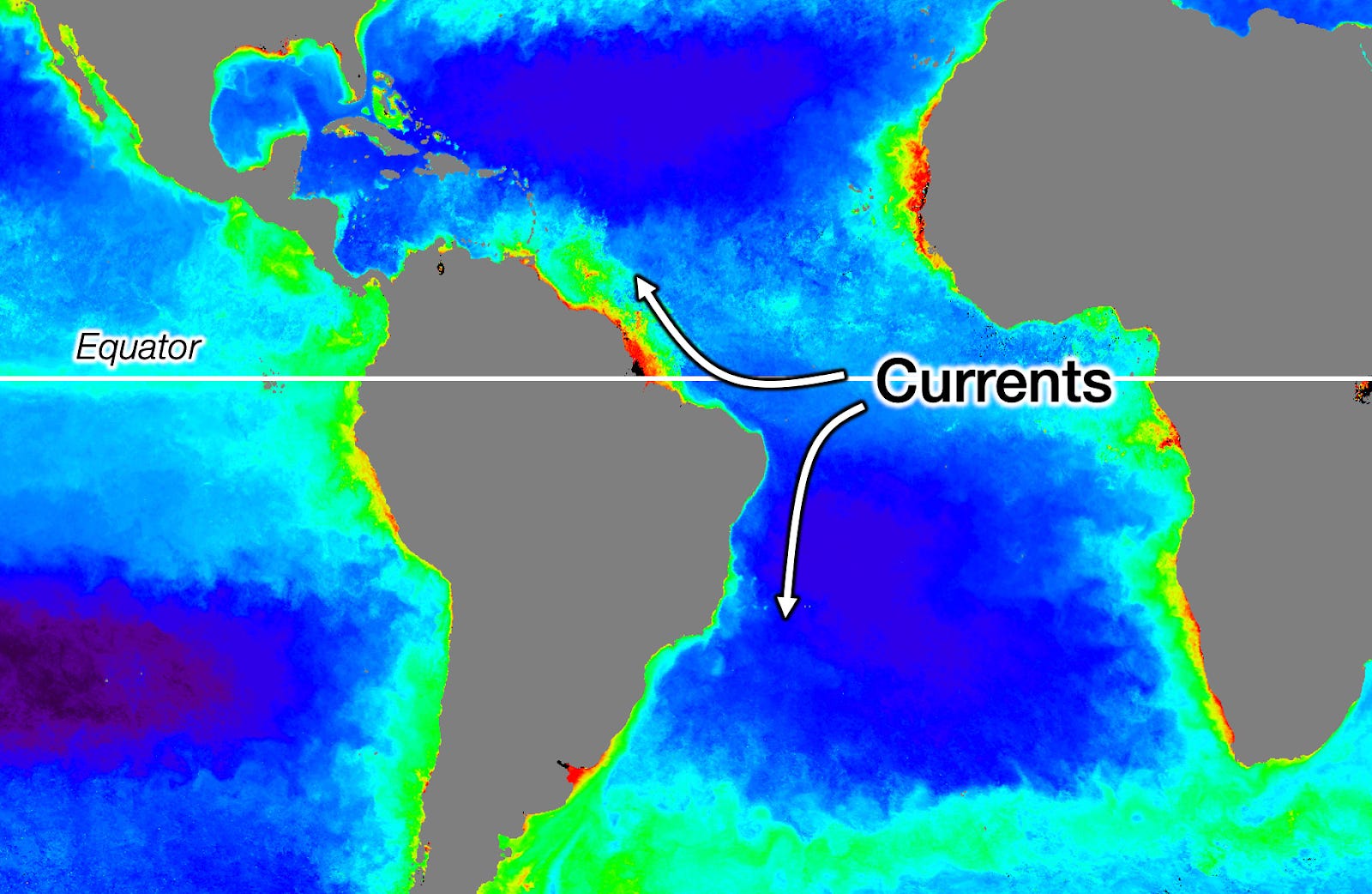
So why is there a massive red spot just at the equator?
That’s the Amazon river mouth.
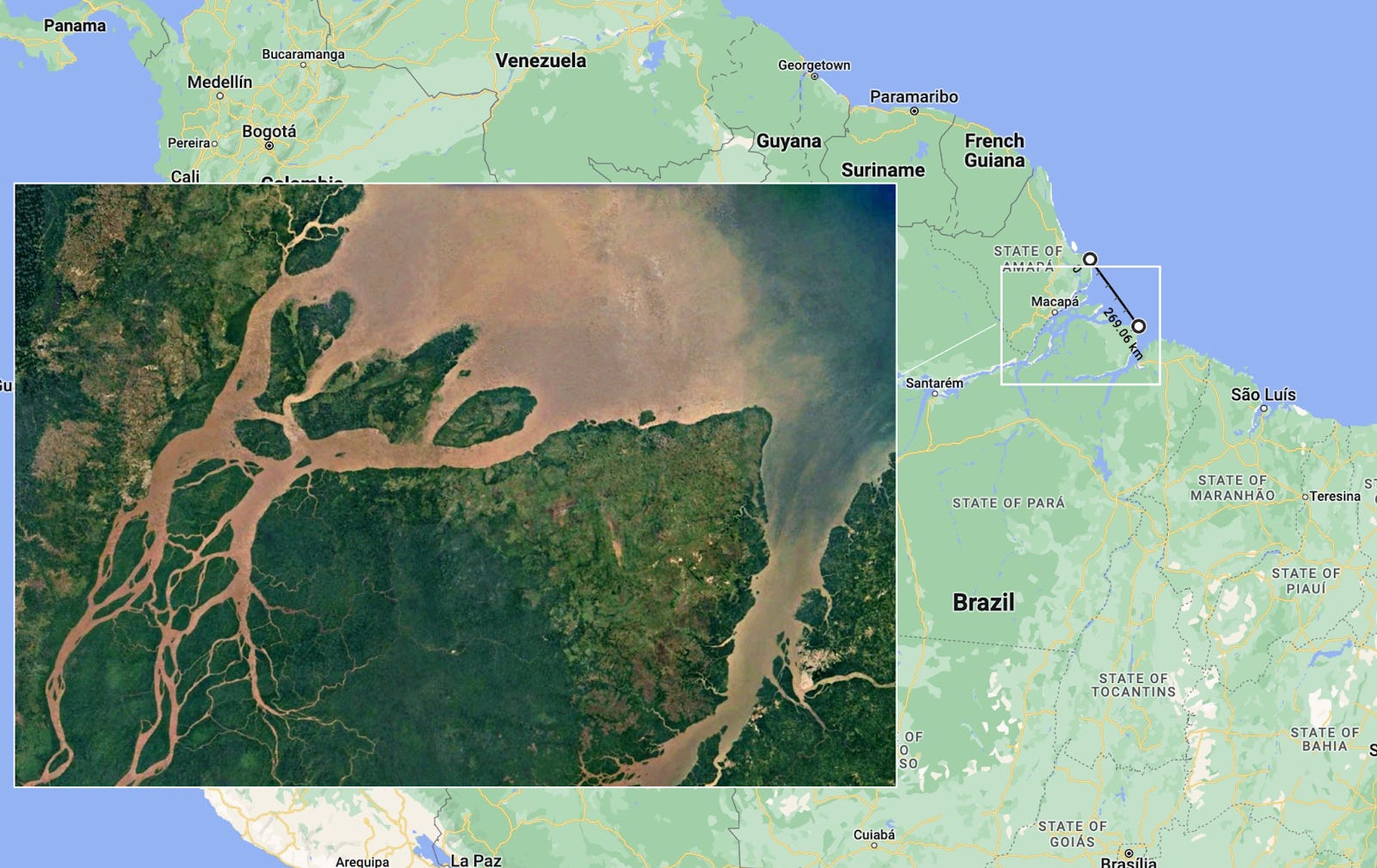
Remember how we said in a previous article that the Amazon river water didn’t mix with ocean water for many kms? Now we know why:
Since it comes from the continent, this water is warmer than in the depths of the ocean, so lighter.
It’s also freshwater, so it’s lighter.
Meanwhile, the Atlantic water is very warm, but also saltier because so much water evaporated.
The result is that both the ocean water and the Amazon water are relatively light, remain at the top, but don’t mix well.
This is good, because it’s full of nutrients, which accommodate life. You can see in the red map above that this water is pushed northwest along the coast of Brazil, where plankton and animals thrive.
The same is true for most other big hotspots of life:
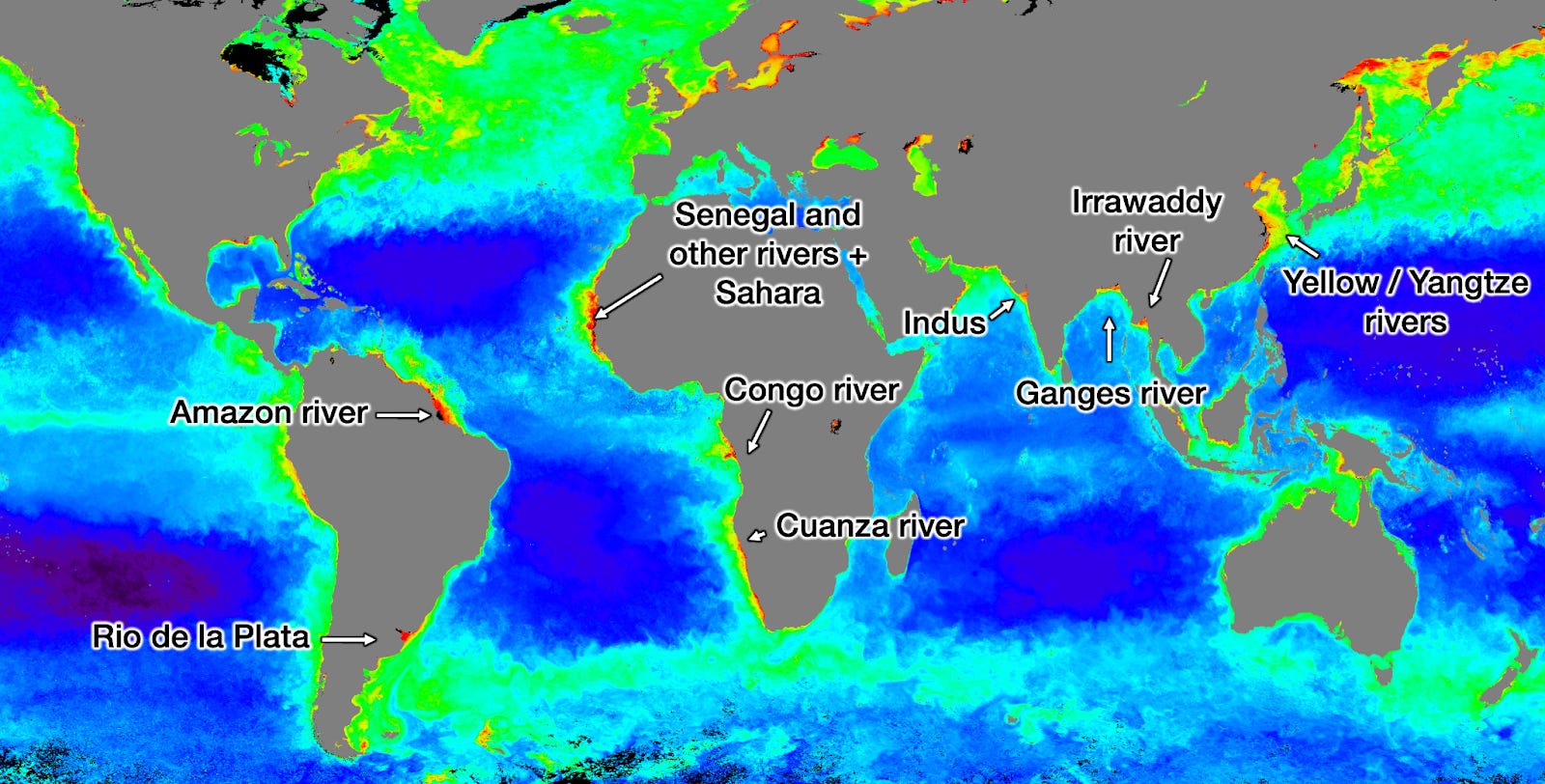
The only place where there’s a lot of life in tropical seas that isn’t caused by an upswell of deep cold water is here:
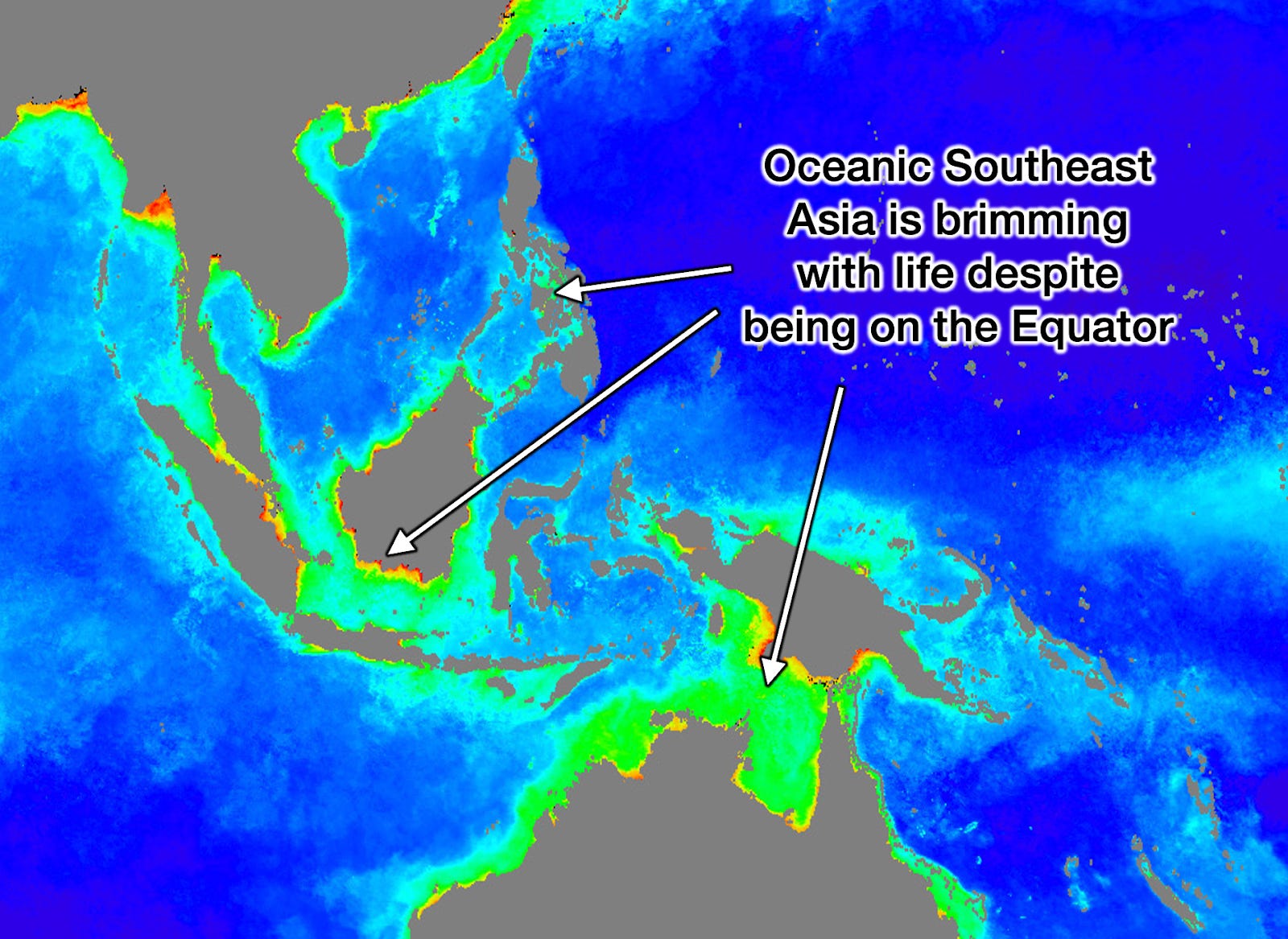
The reason is this:
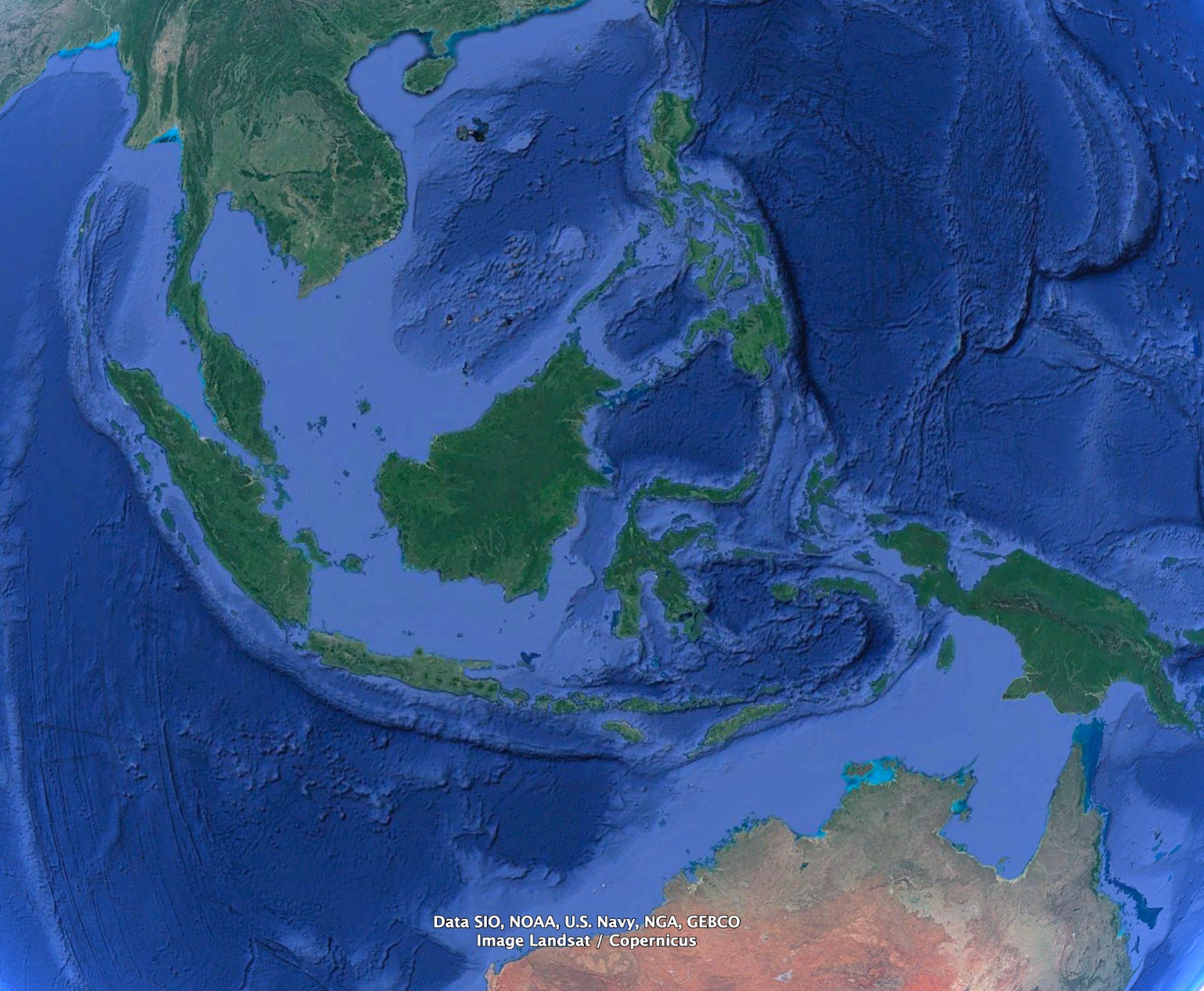
You can see that nearly all the lively areas are relatively shallow. On this map, light blue is about only 50m deep (150ft or so). At this depth, there’s no thermocline! Water is warm down to the bottom of the ocean, so there’s no huge temperature difference, and surface water mixes with bottom water easily, bringing the nutrients back up.
Does Any Expert Disagree with You, and if so, What Do They Say?
Your editor, Shoni, fished this counterpoint from a PhD in ocean science:

There are so many mistakes on this thread. Let's try to correct some of them.
First, the tropics is NOT DEAD. Chlorophyll is a bad measure of how "alive" the water is. In fact, the tropics is teeming with plankton and very productive similar to the polar regions (see map).


Why are tropical waters so transparent?
Because they're dead.
This is connected to why some scientists fear global warming could make Europe *colder*
And freeze 80% of all humans above the 60th parallel:


Here are his complaints:
Chlorophyll is a bad indicator of life because there’s much more sun in the tropics so phytoplankton needs less chlorophyll there to capture the energy it needs.
For easy comparison, let’s paste side to side the two maps of primary biological productivity and chlorophyll:
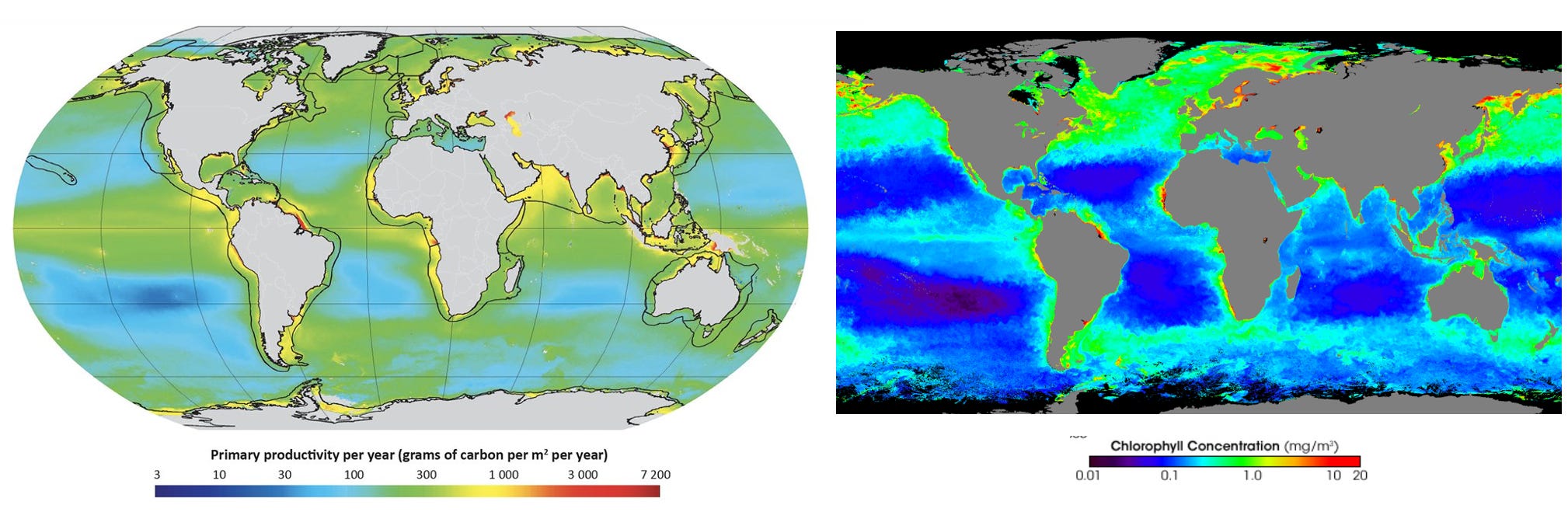
It’s nearly the same map! It’s just that the choice of colors makes the contrast less stark in the map he proposes.
There is still some plankton in the desert areas.
It’s true! In the free article this week, I claimed the following:
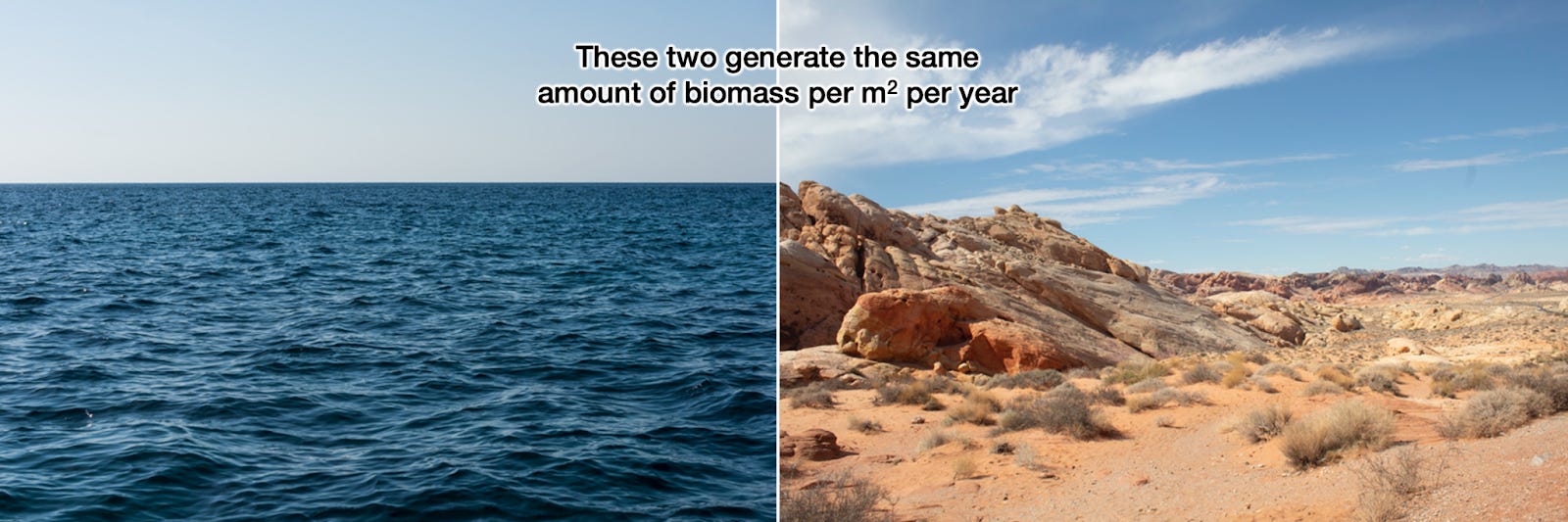
But deserts still have some life! Both of these generate approximately the same amount of grams of biomass per m2 and per year: about 125 for the open ocean, and 90 for the deserts. As a comparison, upwelling zones generate 500, a savanna generates 900, and a rainforest 2,200.
Since these are the main concerns from an expert, it looks like we can feel comfortable about our conclusions.
Hurricanes
Why Is the Gulf Stream in the North Atlantic but Not the South Atlantic?
If we go back to the image of sea temperatures, you can see the North Atlantic is warmer longer than the South Atlantic. You have green (somewhat warm water) going all the way to the top of Europe, but deep blue (colder) water pretty much around the globe in the southern Atlantic.
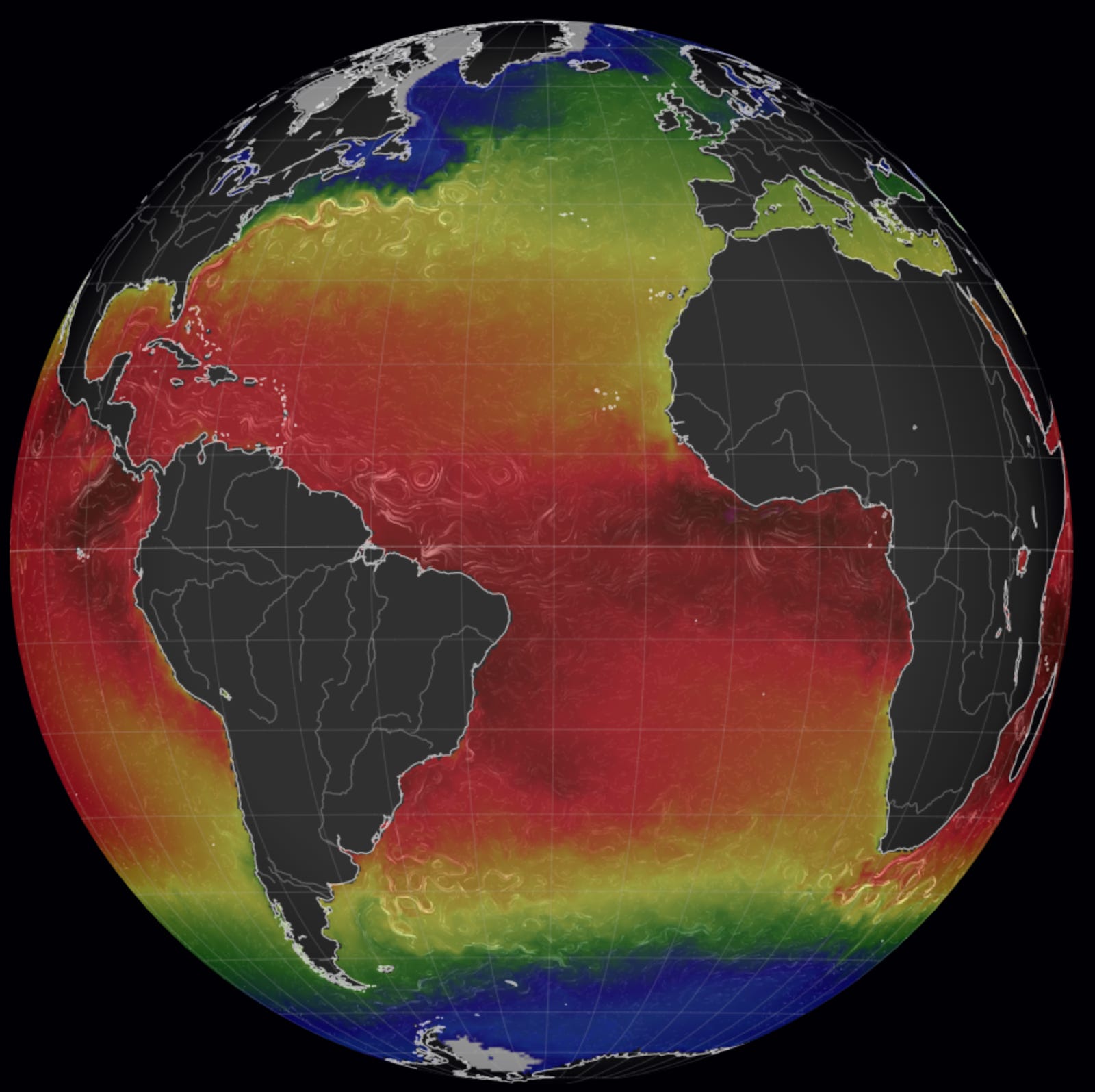
Why?
From what I could read, the main reason is that there’s open sea south of South America. The result is that cold water from the south Pacific Ocean moves unimpeded towards the Atlantic, making those waters cold. Meanwhile, North America stops these currents in the north, so the Gulf Stream flows freely.
I have another guess. I haven’t read this anywhere, so it might be wrong: The shape of Brazil means there’s a wedge against the warm currents from the equator. Because the wedge is south of the equator, most of the warm water will go north. That means more warm water going north and less going south.
More cold water from the Pacific plus less warm water from the mid-Atlantic makes the South Atlantic colder than the North Atlantic.
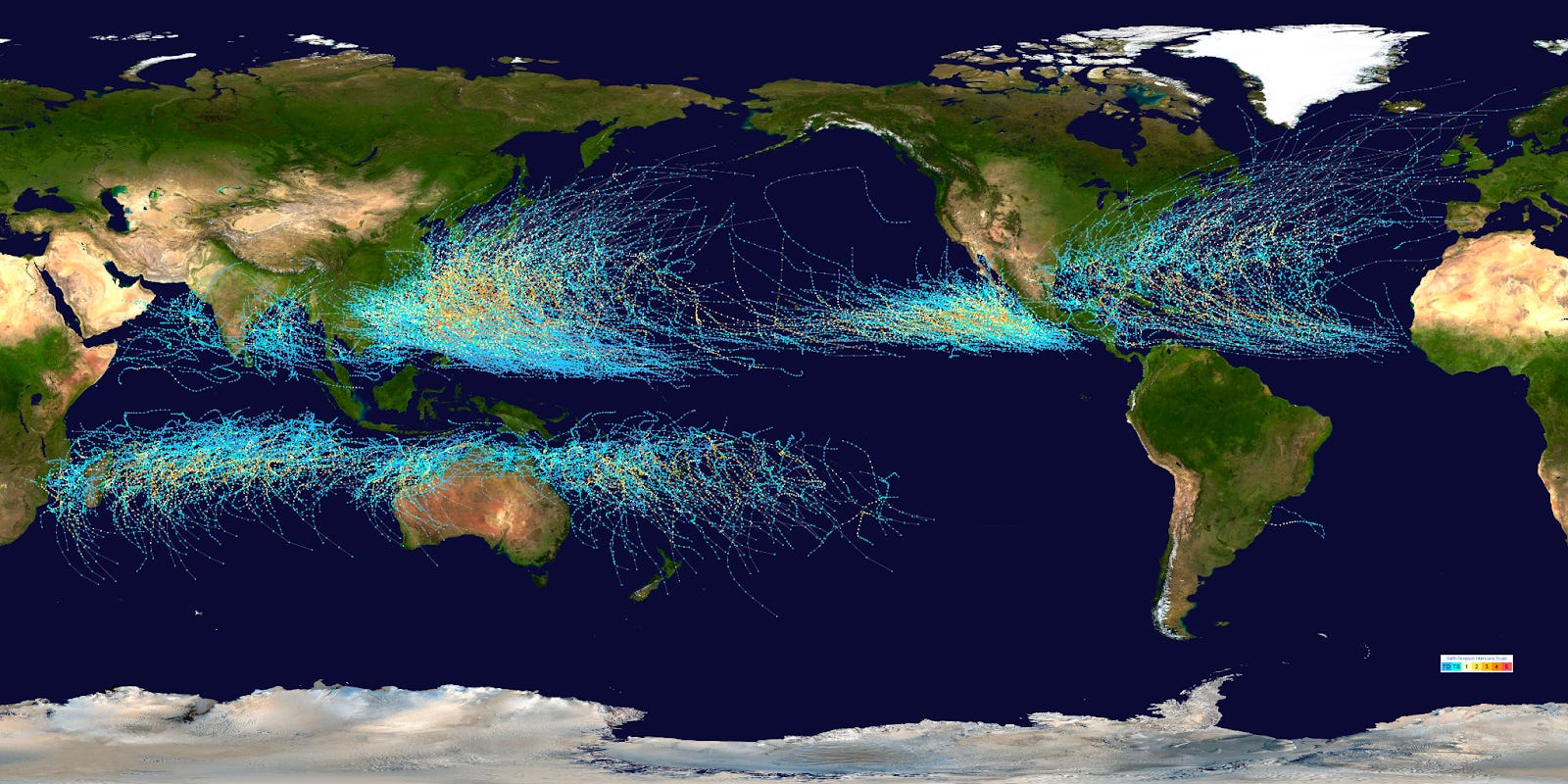
And since you need a lot of heat for hurricanes to form, apparently the colder South Atlantic is not warm enough to cause hurricanes [2] .
Which Shipwrecks Last the Longest?
One of the interesting consequences of all this marine geology and biology is that it can help us predict which shipwrecks will last the longest.
For example, shipwrecks in Indonesia are unlikely to remain for long. Same thing for those in shallow polar waters.
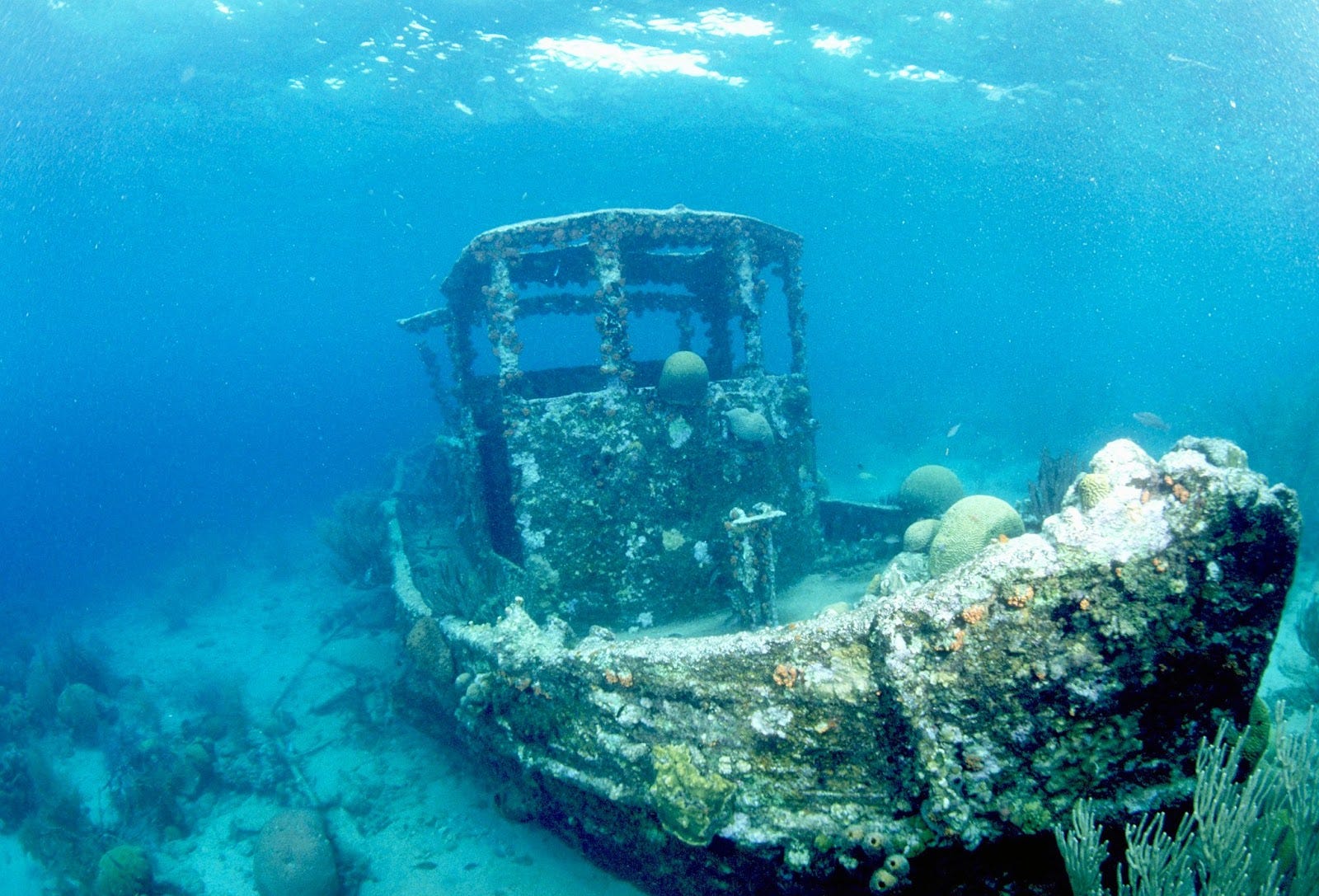
Meanwhile, shipwrecks in the middle of the deep ocean, where it’s cold, there’s no life, and no water upwells, will be much better conserved.
And in the Black Sea, shipwrecks are extremely well preserved.
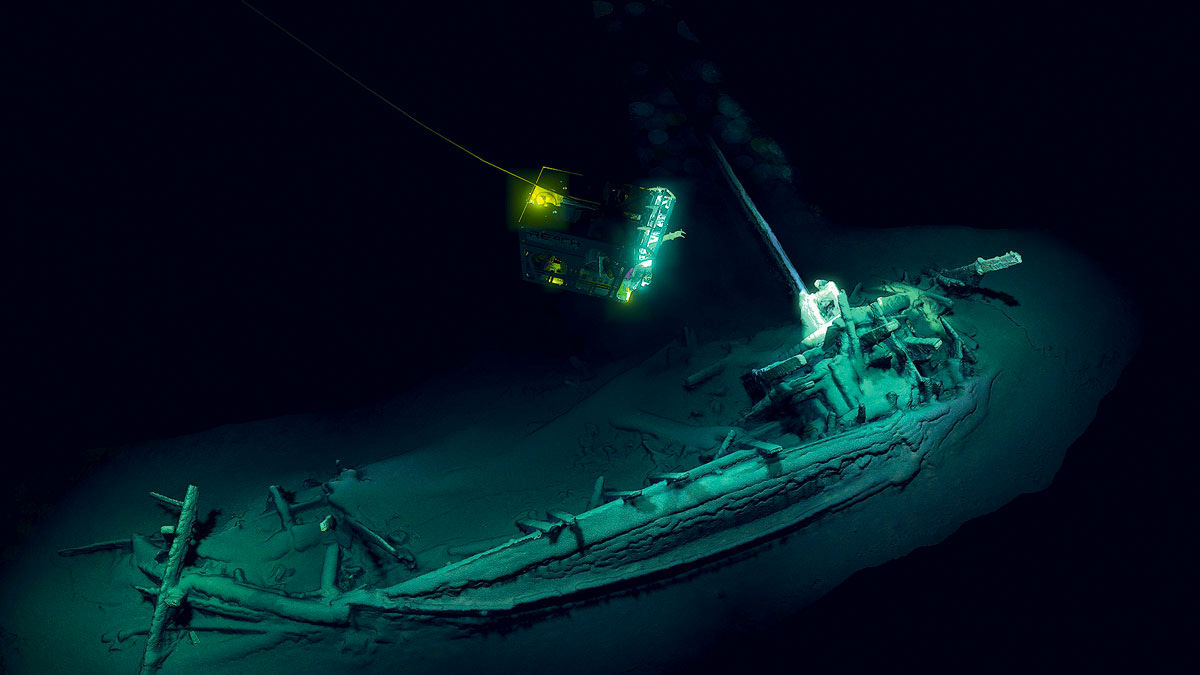
This one is 2,500 years old. How crazy is it that a wooden structure could last that long underwater?
Why is that? Because the Black Sea has no current mixing top and bottom waters at all [3] . And why is that?
The Black Sea is special because of its connection to the Mediterranean. The Black Sea receives freshwater from its rivers, which flow to the surface. But the Mediterranean is very salty. As we know, salty water is heavier. So what happens is that the light freshwater from the top flows into the Mediterranean, whereas the heavy saltwater from the bottom of the Mediterranean Sea flows into the bottom of the Black Sea. You end up with a bottom layer of water that is both salty and cold, making it much heavier than the top. Without water mixing, you also don’t have much light that makes it to the bottom, nor oxygen in the water. The result is no animals, no plankton, and no plants to grow at the bottom of the sea—the surface is still OK.
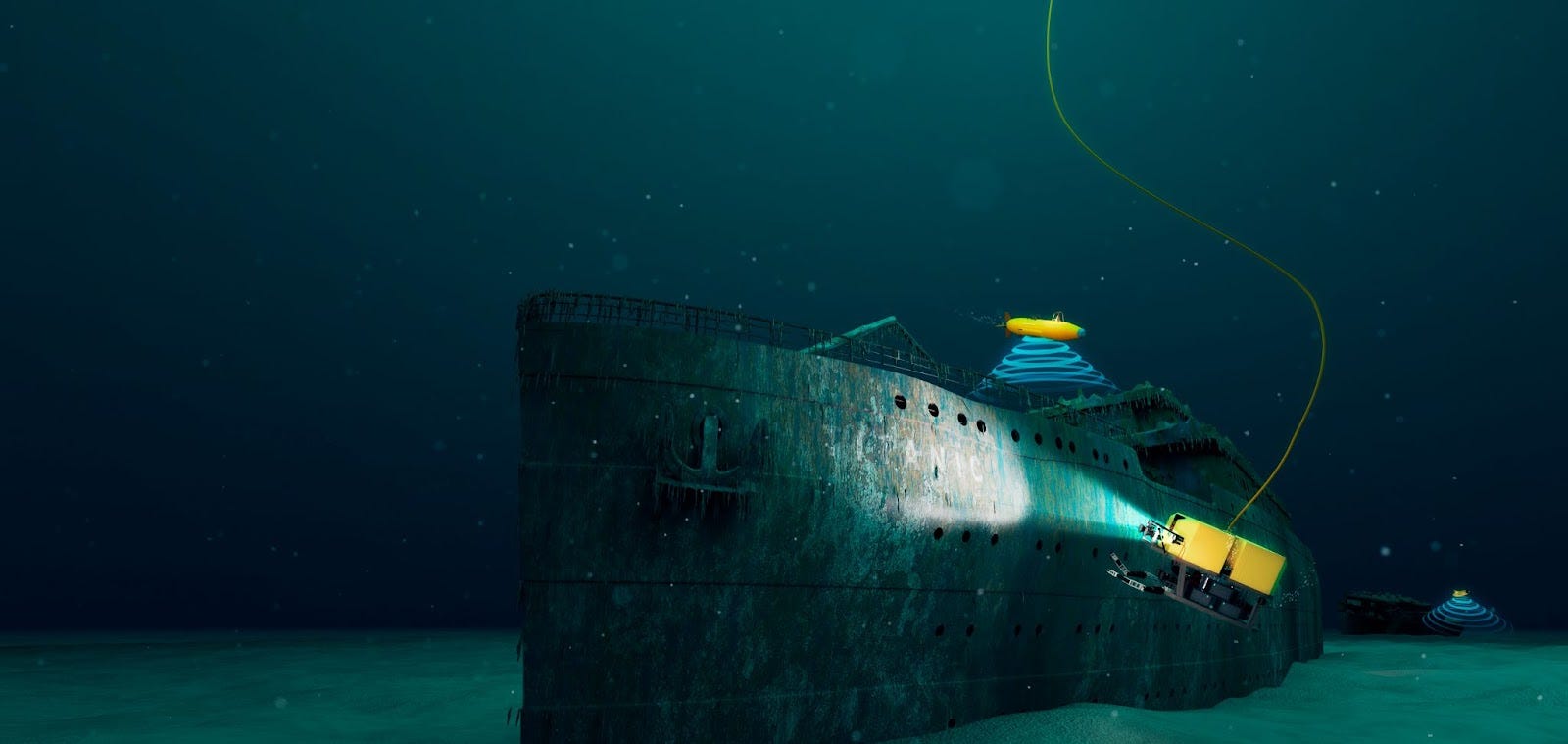
Conversely, the Titanic is 3,000m deep in very cold waters, but the surface water is also quite cold—that’s why it hit an iceberg. So maybe there’s enough water mixing that it will decay faster than wooden boats from 2,500 years ago.
Why Are Food Chains Longer in the Ocean, and What Does That Tell Us About Future Farming?
Why is the food chain shorter on land than in the ocean? Because of gravity.
The food chain on land is mostly made up of plants, eaten by herbivores, eaten by carnivores. You don’t have more layers of carnivores feeding off of other carnivores. By and large, carnivores just eat herbivores. Think about humans: Do we eat many carnivores?
But in the ocean, you have layers upon layers of carnivores! The plants are phytoplankton, and the herbivores are zooplankton. But then that zooplankton is eaten by krill. The krill is eaten by small fish. The small fish can be eaten by penguins for example, who are eaten by seals, who are eaten by orcas. You have many layers of carnivores. Why the difference?
It’s a matter of efficiency.
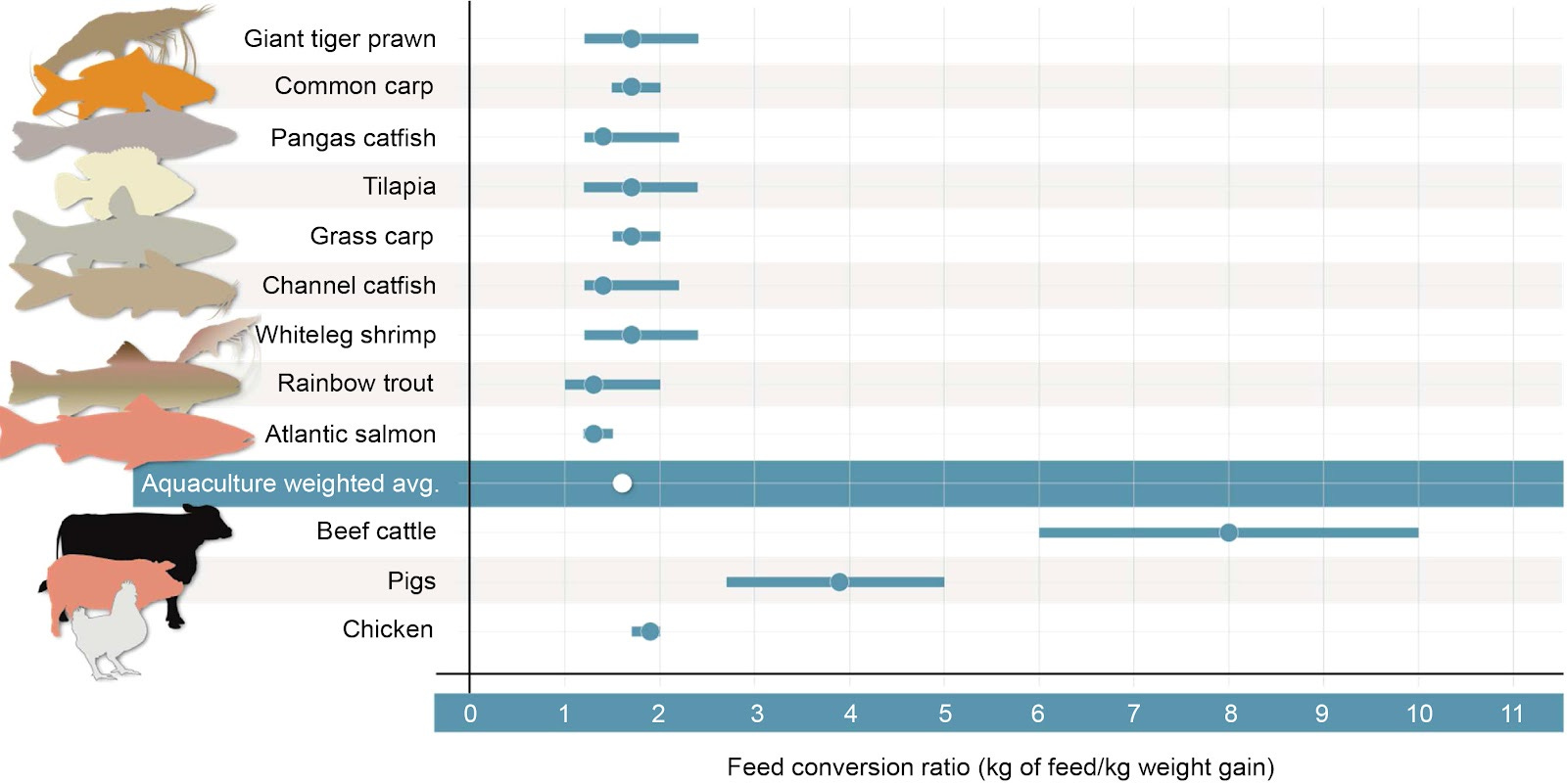
Look at this graph. At the top, you have fish and other oceanic farm animals. At the bottom, land farm animals.
To produce 1kg of fish, you just need about 1.5kg of feed. Fish can convert nearly all they eat into their own body!
But to produce 1kg of cow, you need 8kg of feed. They waste 88% of their food. Why? Because a lot of the food for land animals is used for other things than building muscle.
Body Structure
Fish float thanks to water. They don’t need a strong internal infrastructure to stand. Their bones are not very big or strong. On land, however, you need very strong bones and other structural support to stand on your legs and fight gravity. This takes lots of energy.
Warm Blood
Another reason is that land farm animals are warm blooded, while fish are cold blooded. This uses a lot of energy. If you stopped eating today, you wouldn’t survive more than a month or two. A crocodile, on the other hand, might live for a year or more. Why the difference? You waste most of the food you eat generating heat.
Mammals and birds are warm-blooded. Keeping blood warm uses a lot of energy. This energy needs to come from food. So animals transform part of their food not on meat but heat.
Which begs the question: Why are more air animals like birds and mammals warm-blooded than water animals like fish [4] ?
Warm-blooded animals can be active when it’s cold, whereas the metabolism of cold-blooded animals is slower in these situations.
This also has the advantage of not needing to find exposure to the sun—and thus to predators—at inconvenient times.
It also allows mammals to conquer colder regions.
Another reason is that most fungi and bacteria can’t survive in a warm body. Insects, reptilians, and amphibians are plagued by fungi.
Despite its advantages, warm blood is a massive energy sink, which uses a lot of food.
There might be more reasons why land animals need more food than sea animals per kg of their own meat [5] . Regardless of these reasons though, the reality is that this ratio exists. What are the consequences?
Imagine a land carnivore. A lion, for example. It might need 10kg of other animals to build 1kg of its own body. Let’s assume the herbivores they eat need 8kg of plants for every 1kg of meat they build. That means that for every 1kg of lion meat, you need 80kg of plants.
Compare that with the sea. Let’s assume that the feed conversion ratio (FCR) is 2 on average. 80kg of phytoplankton might produce 40kg of zooplankton, 20kg of krill, 10kg of small fish, 5kg of big fish, 2.5kg of shark, and maybe 1kg of orca [6] . Instead of one layer between bottom and top of the food chain, you have five.
Why is this relevant? Because it can make the world more sustainable.
Fish Farming
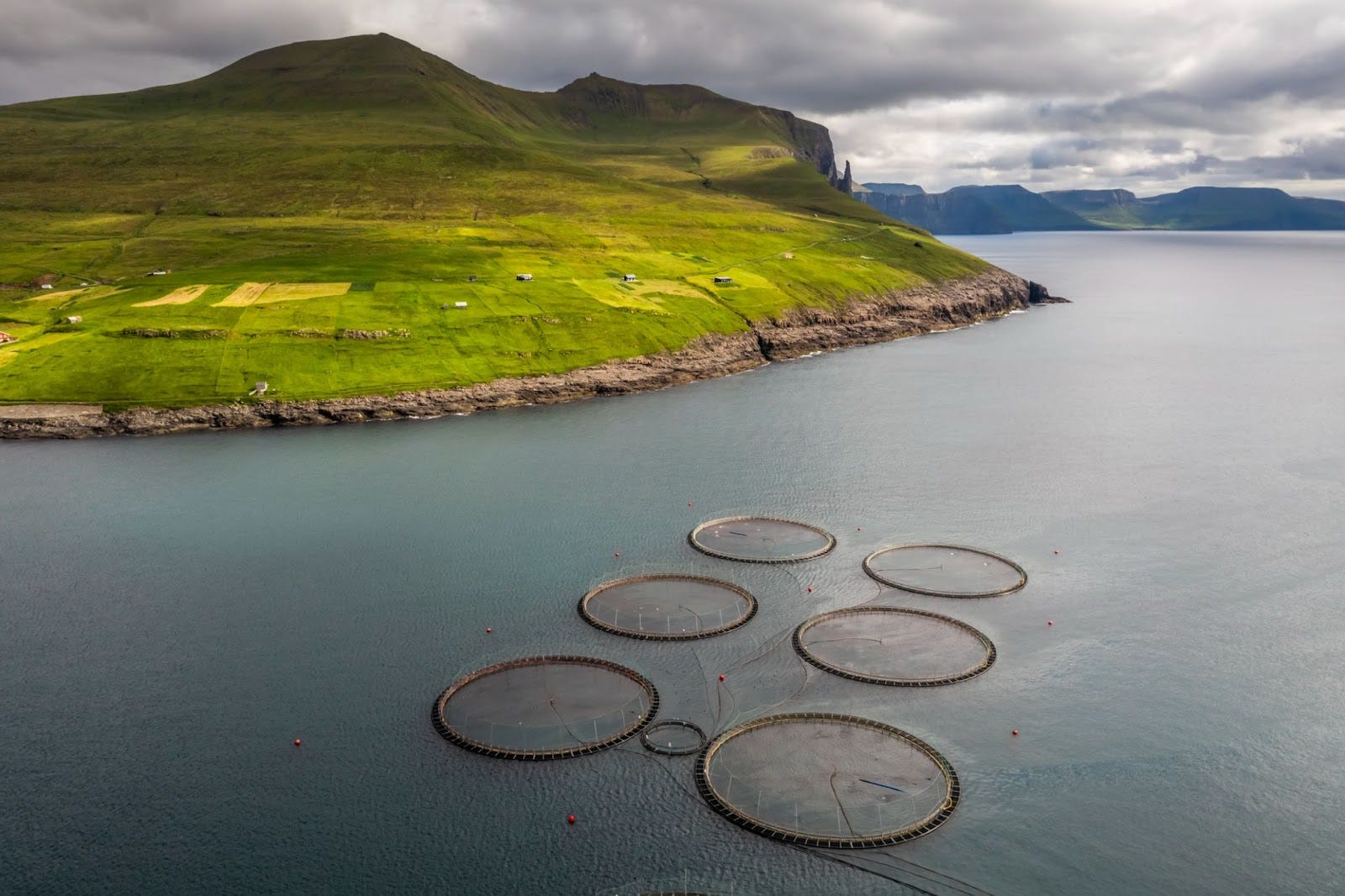
Imagine you need to produce your feed on land. If you need 8kg of feed for 1kg of cow, but just 1.5kg of feed for the same amount of fish, it means that every kg of fish protein uses about 5 times less land than cow protein. Or it means the same amount of land can feed 5 times more people.
As technology gets better, humans are succeeding at aquafarming farther from the shore.
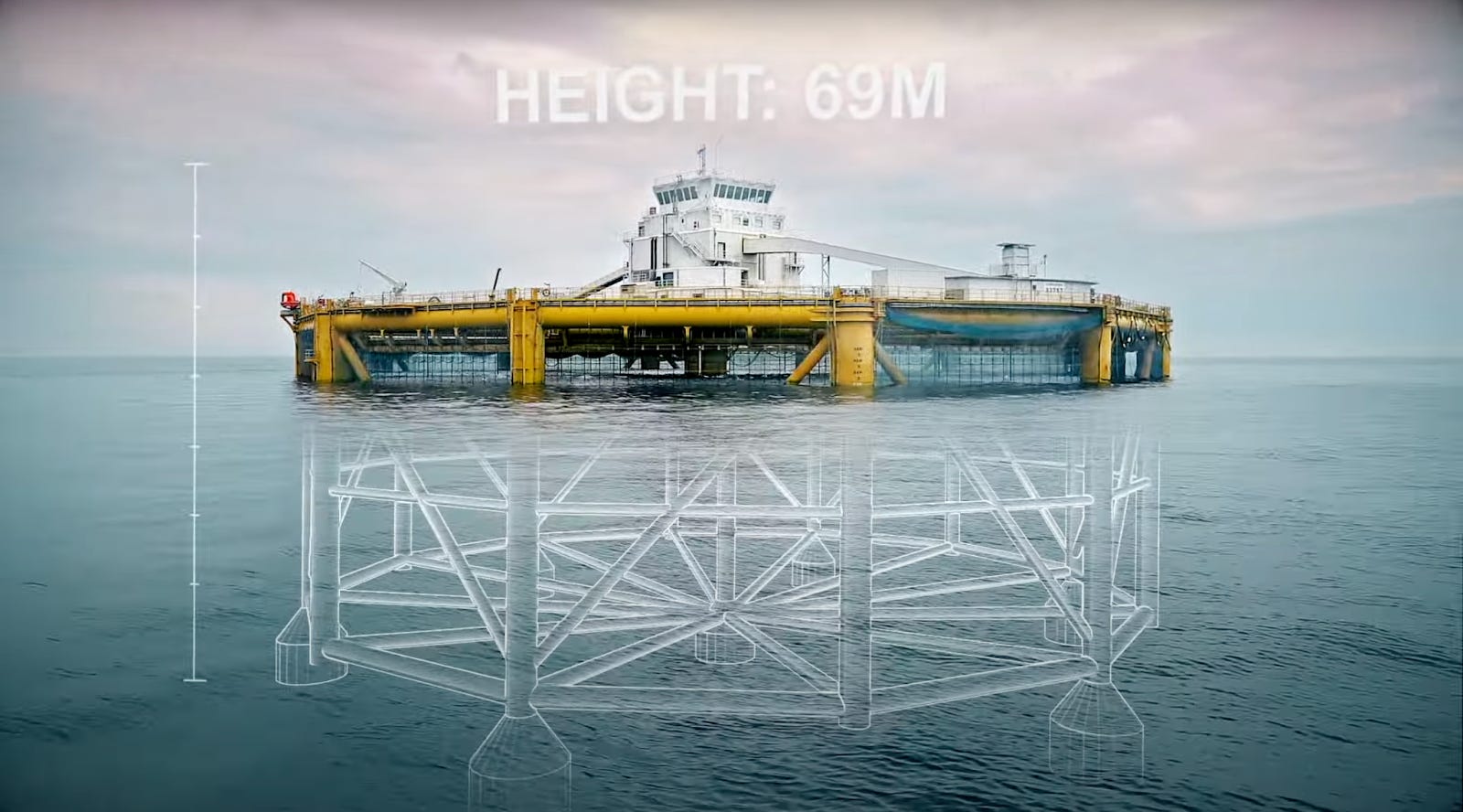
But the holy grail would be to go beyond the continental shelf and farm fish in the open ocean, which is about ⅔ of the world’s surface area, and as we saw they are deserts. We could use all that space to grow fish. It would be like making the Sahara green.
The only issue would be feed. The Southern Ocean Iron RElease Experiment (SOIREE) tried to see if it could produce phytoplankton by just releasing iron into the sea and succeeded. It turns out that iron is the limiting factor for phytoplankton growth in the open sea, and iron fertilization could solve that.
Unfortunately, iron needs to be mined and transported—and creates CO2—making this unviable right now. But could there be alternative ways to fertilize ocean deserts with iron? Could we find an economic way to, say, pump up the sediments from the bottom of the sea to the surface?
Because the Earth rotates eastwards. That’s why the sun rises to the east. The atmosphere is just trying to catch up with the Earth, it rotates eastwards more slowly than the Earth, so it seems like it’s going west at the equator.
I’m not fully satisfied by this explanation, but I couldn’t find anything else good enough to share. If anybody knows more why this forms, I’ll be all ears.
We call these meromictic bodies of water. The Black Sea is the biggest one in the world.
This is what I could find. If you have better explanations, please share them with me!
Another reason why land animals might waste more energy than sea animals is because there’s food in three dimensions in the sea. This makes the path to your next meal shorter, so you need to spend less energy hunting per kg of meat you eat. Another might be that sea animals on average are smaller and younger. Usually, the growth period is early in an animal’s life. Cutting lives short means more time growing.
I have no idea what the FCR of orcas might be, and a quick search on Google didn’t yield great results.