A Brief History of the Caribbean, Part 2 - by Tomas Pueyo A Brief History of the Caribbean, Part 2
Some content could not be imported from the original document. View content ↗
2021年6月25日
∙ Paid

This week’s premium article goes in depth into several key aspects of the Caribbean that I left out: slavery, plantations, what’s the role of oil in all of this, why cities are sinking across the world—hint: because they’re like oases—why it’s useful to think about the US South as similar to a Caribbean economy, and… what we can this all teach us about space exploration.
I hope you enjoy!
Sugar, Plantations, and Slavery
You have to watch this 2m video. You can watch it at 2x speed if you want.
Source: Slavevoyages.org
It shows every shipment of slaves from Africa to America since the 1500s. There’s a LOT of them.
This map clearly shows where slaves came from and where they went.
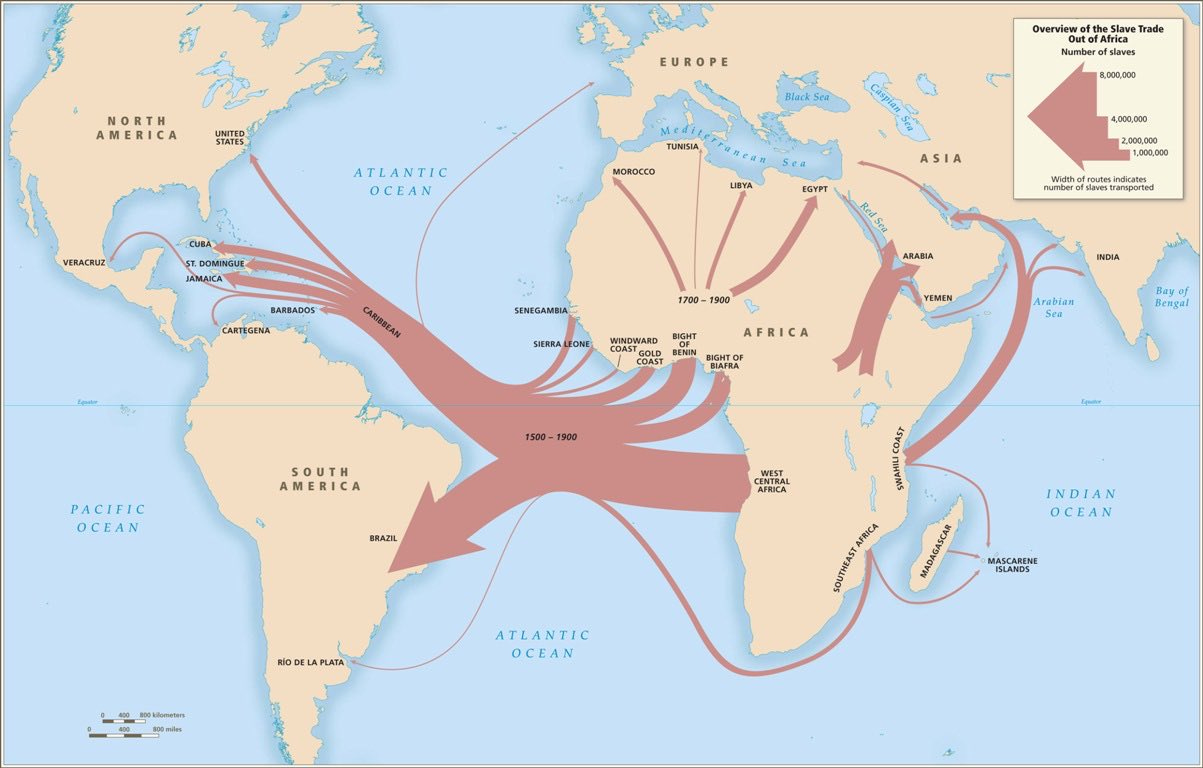
The bulk of slaves didn’t go to the US. Only a few went to Mexico or Colombia.
The vast majority went to the Caribbean and Brazil. That’s why their populations are substantially more Black. Why? Because of plantations and local labor.
In Mexico and Bolivia, there were enough locals to mine the silver. Crops were too expensive to transport to the sea, so there was no crop trade, and no labor-intensive plantations.
In the Caribbean, however, trade was much cheaper because of access to the sea. And weather was ideal for some tropical cash crops, mainly sugar and tobacco, but also coffee and indigo.
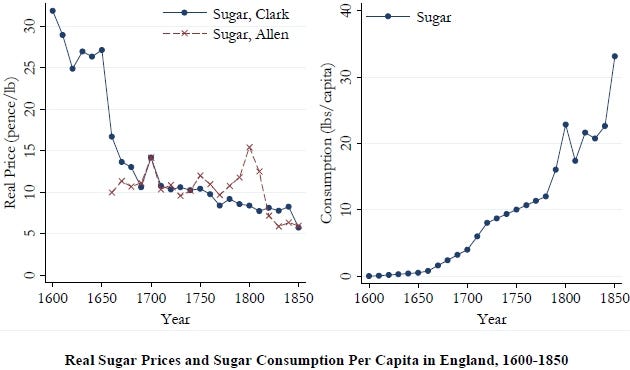
In the 1600s, the price of sugar was so high that it was an amazing business to produce and sell it. The more standards of living increased in Europe, the more people consumed things like coffee, cocoa or tea, the more they wanted sugar with them, the more it was produced, and the more prices went down. By the 1700s, consumption was exploding, and so was production. With higher demand but a lower price, the countries producing sugar—mostly Britain, France and Portugal—started needing a lot of cheap labor that wasn’t available locally. They decided to get these people where they could, Africa.
"If we have no Negroes, we can have no sugar, tobacco, rum etc. Consequently the public revenue, arising from the importation of plantation produce, will be wiped out. And hundreds of thousands of Britons making goods for the triangular trade will lose their jobs and go a begging." —Malachi Postlethwaite, economist, 1746
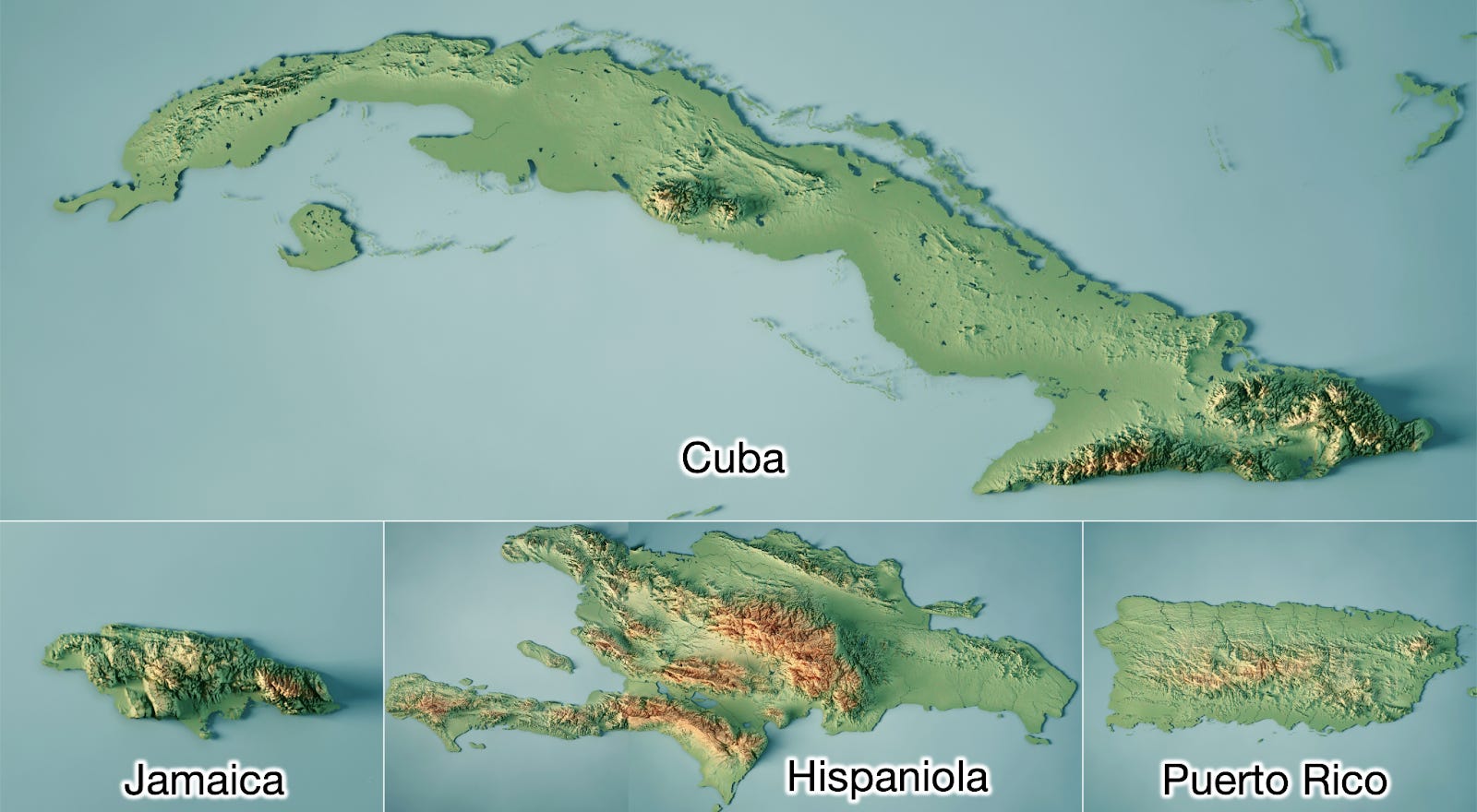
In the Caribbean, most islands could grow sugar cane, so they did. But the better ones were the big ones: Cuba, Hispaniola, and some parts of Jamaica. Because Spain controlled both Cuba and Puerto Rico, and Cuba is substantially flatter and bigger than Puerto Rico, it made sense to have plantations there, and hence send slaves there and not in Puerto Rico, and why the population has more Black people in Cuba than in Puerto Rico.
Also, Cuba gained its independence nearly one century after Haiti, which was one of the biggest producers of sugar cane before its independence in 1800. During that century, Cuba picked up the production of sugar to take over that market, and that’s why so many slaves went there in the 19th Century.
The problem with plantations is that all the capital was used to get cheap labor.
It is horrible to think about slavery only in terms of economics, but this is very much how people thought about it at the time. We need to understand the mechanics to understand history. From an economic standpoint, a slave was a capital investment. Plantation owners paid a high upfront price in exchange for a low ongoing cost. This is worth it only if you need an intense amount of labor that you can amortize over a long period of time. That’s what plantations needed.
In the 19th Century, when many of the Caribbean islands became independent, they finally freed the slaves. That is unequivocally fantastic. Financially, it did upend the economy: all the capital investment disappeared overnight (because slaves are not a property anymore), and the variable costs shot up (because you had to pay for work and better living conditions after that).
This had the double effect of increasing the labor costs while wiping out most capital in the islands. That labor cost made crops much more expensive to produce, much less profitable, and a much weaker source of wealth. Because all the capital had been invested in buying slaves instead of investing in skills, manufacturing, or infrastructure, these islands had no wealth to help them be more productive.
And that’s the key reason why most of them became quite poor, and are poor to this day. They arrived at the mid 19th Century with nothing: no built capital, no skilled labor. They had to start from scratch, and they didn’t have a very conducive geography to do it.
It’s the Same as in the US South
Thinking about it this way, the US South was a bit like a Caribbean economy.
What was the South of the US, if not a Caribbean economy of plantations supported by great, warm weather and lots of rain? And hence what did they grow? Sugar cane, cotton… Labor-intensive crops that benefitted from a plantation system. So they built their capital in slaves.
Meanwhile, in the North, those crops didn’t work as well. Corn and wheat are not as labor-intensive. Big plantations were not the optimal economic structure. Independent farming was much more productive per worker because farmers’ self-interest made them more productive than slaves. So instead of investing their capital in slaves, the North invested it in infrastructure, manufacturing, railroads.
That’s why the Civil War, and why the North was always going to win. The North didn’t need slaves, and could build an infrastructure that helped during the war, much more than the Southern investment, Black slaves.
The South, given their economy, needed slaves and that’s where they invested their money. Take the slaves away, you take the economy away. That’s exactly what happened after the Civil War, like in all the newly-independent Caribbean countries.
Let’s be clear, this was an amazing development. It is great that the economic incentives supported what’s right. But it’s also why the South is poorer than the North today.
Why These European Countries and Not Others?
The countries that colonized America are all on the Atlantic coast. The closer they were to the Atlantic, the more likely they were to colonize.
Spain was the first one as it wanted a trade route to Indian spices (that’s why Columbus was so obsessed about finding India), but Venice had a monopoly. Portugal found a way to pass Africa through the south of Africa, so it explored that. But since it was so close to America, once discovered, it decided to join in. Spain and Portugal split the continent according to a meridional division, and hence Brazil. They always respected it, so there weren’t wars between Portugal and Spain in America.
France and Great Britain also had good access to the Atlantic. But they felt left out. They wanted in. So they slowly built their navies to conquer as much as they could. They used privateers in the meantime.
The Netherlands did the same. It was born at the end of the 1500s. It used privateers first, and its national navy later.
The farther you go from the Atlantic, the weaker the European power in the ocean. That’s one of the reasons why Britain had a stronger presence in America than the Netherlands, which had a stronger presence than Denmark, which had a stronger presence than Sweden.
Conversely, Mediterranean polities like Genoa or Venice had interests in the existing trade of the Mediterranean, so they weren’t as interested in America, which was more of a competitor. Also, it would have been hard for them to pass the Gibraltar strait, controlled by Spain, and later also Great Britain.
Oil
Did you notice this light in the middle of the sea in the last article? What is that?
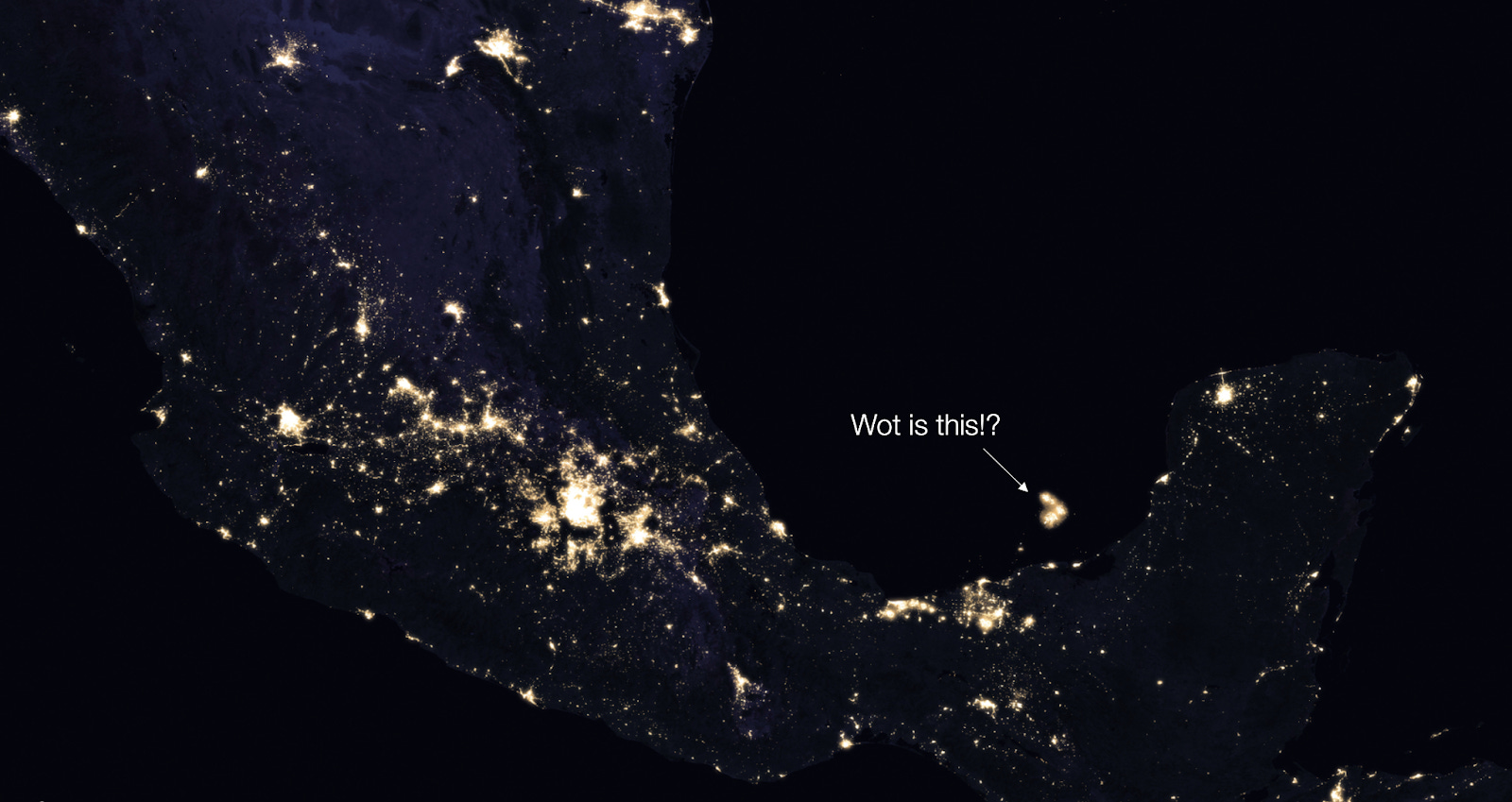
If you go to Google Maps or Google Earth, the answer is not satisfactory:
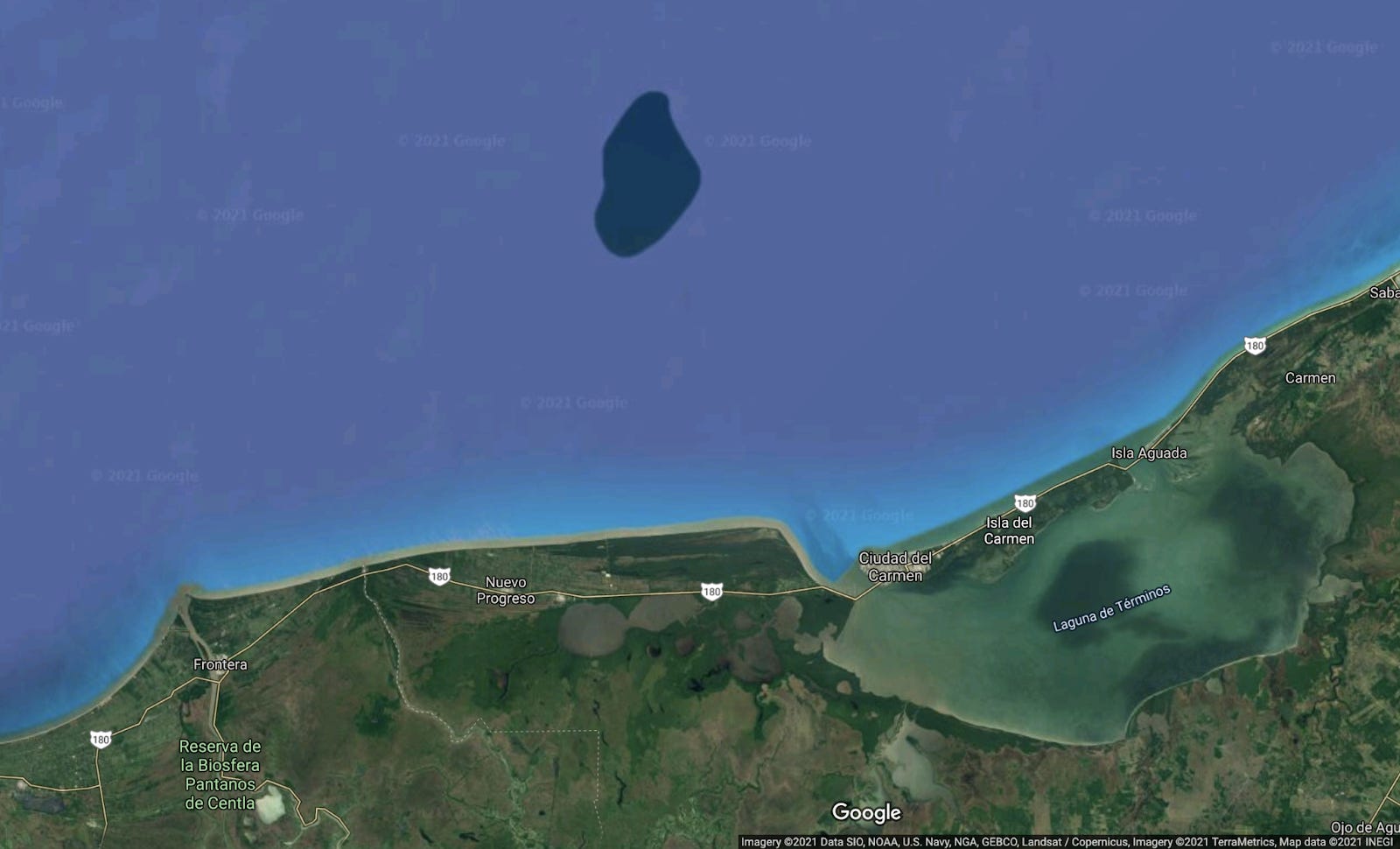
So I started digging and… here’s the answer
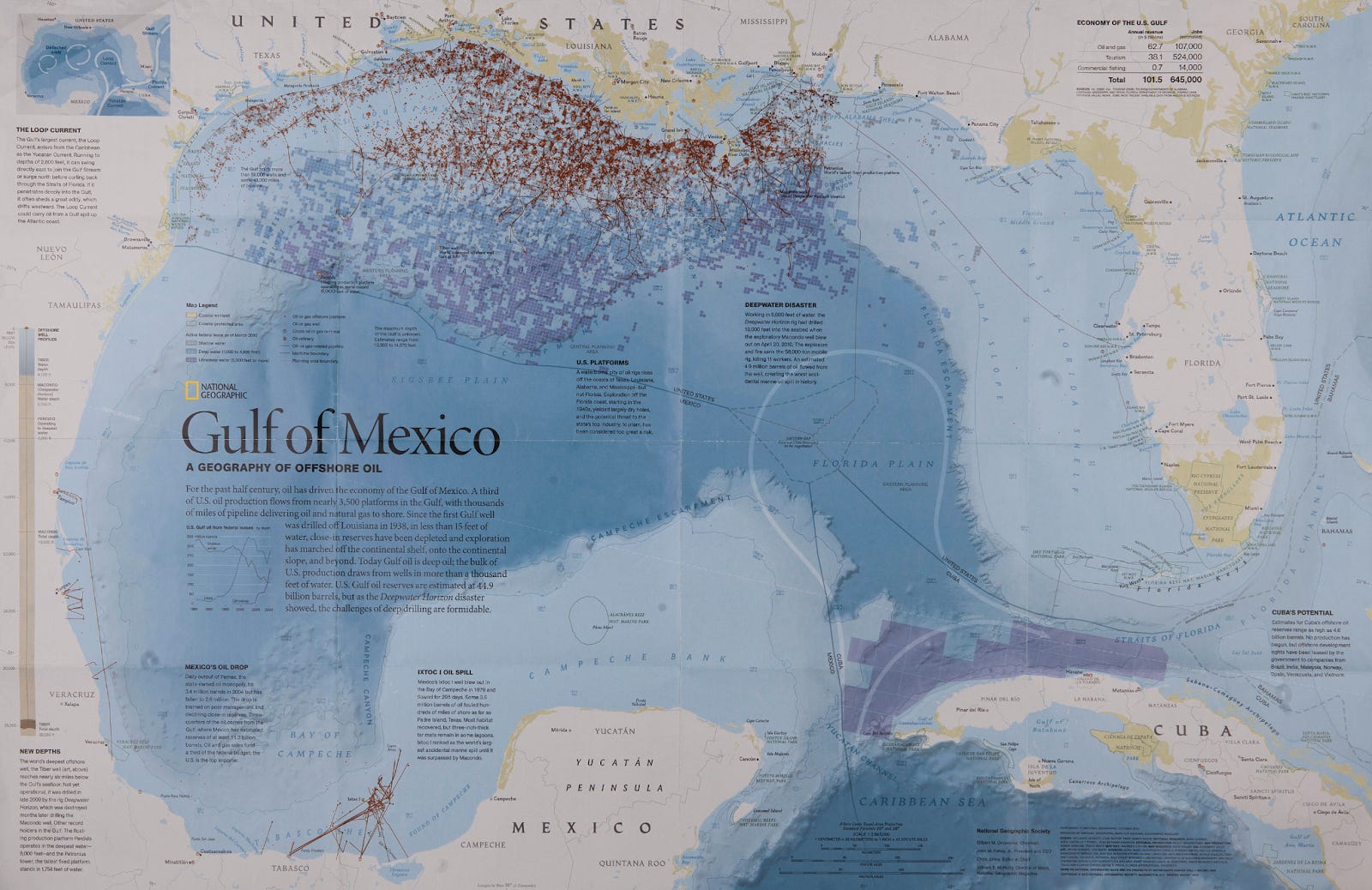
Oil rigs. The two big yellow areas on the night map’s littoral show the supporting petrochemical industry.
This map also shows how massively developed the US side of the Gulf of Mexico is oil-wise. Knowing what you’re looking for, you can zoom in on the sea near New Orleans and see the lights of all these rigs.
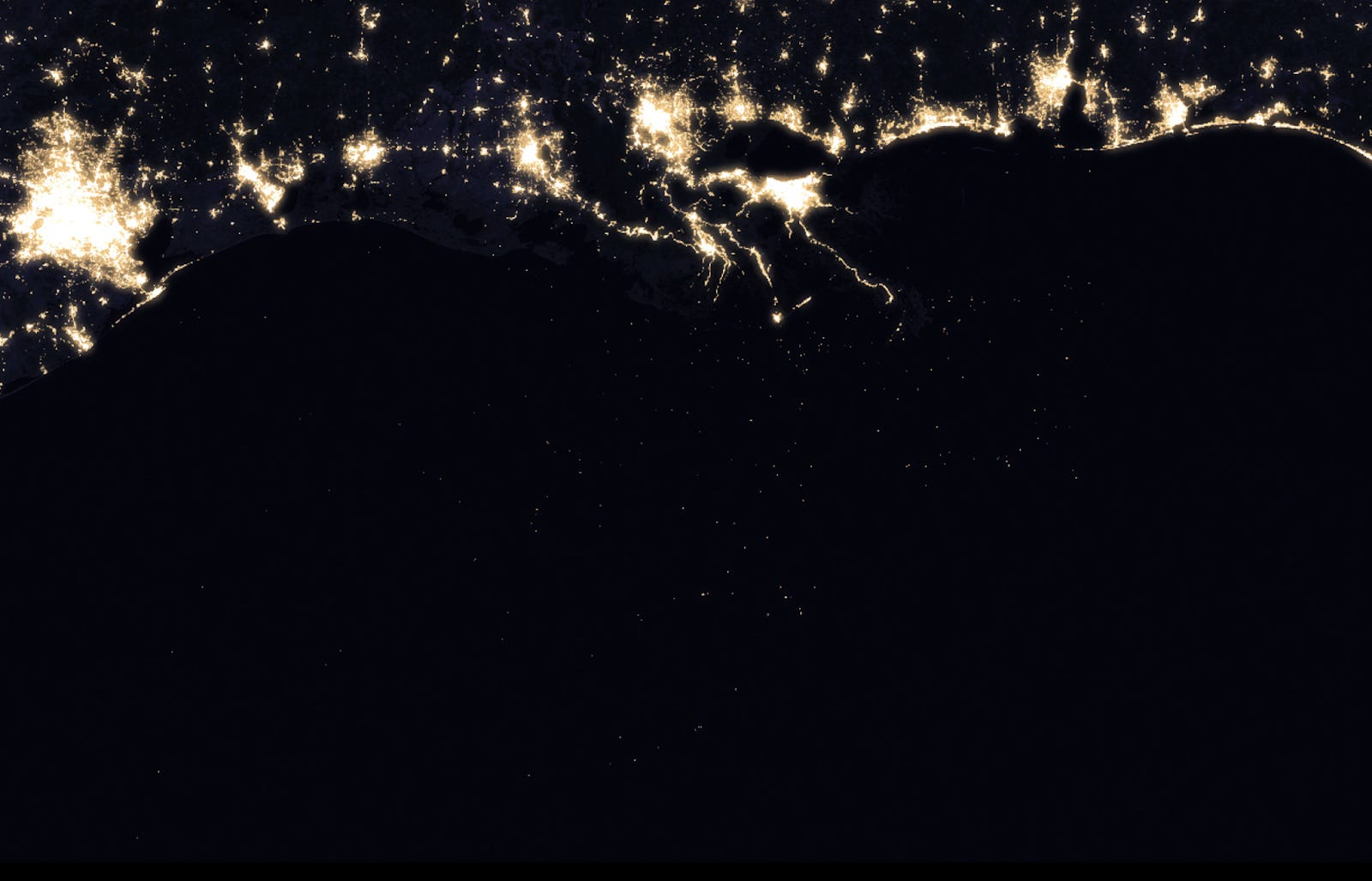
It becomes immediately clear how much oil comes from the US side of the Gulf of Mexico. But the reserves of Venezuela, Mexico, and Cuba are huge. Why aren’t they pumping as much oil? Why don’t they have as many rigs? The only explanation is investment and development: the US doesn’t sit on its reserves, it exploits them.
Oil in Mexico is managed by Pemex. Its production—75% of which comes from the Gulf of Mexico—went down between 2004 and 2010 by a third. Oil and gas fund about a third of the budget of the government. Imagine what the government could fund if it truly invested in extracting oil.
Sinking Cities
Mexico City is sinking between 5 and 40 cm a year.
Remember the lakes?
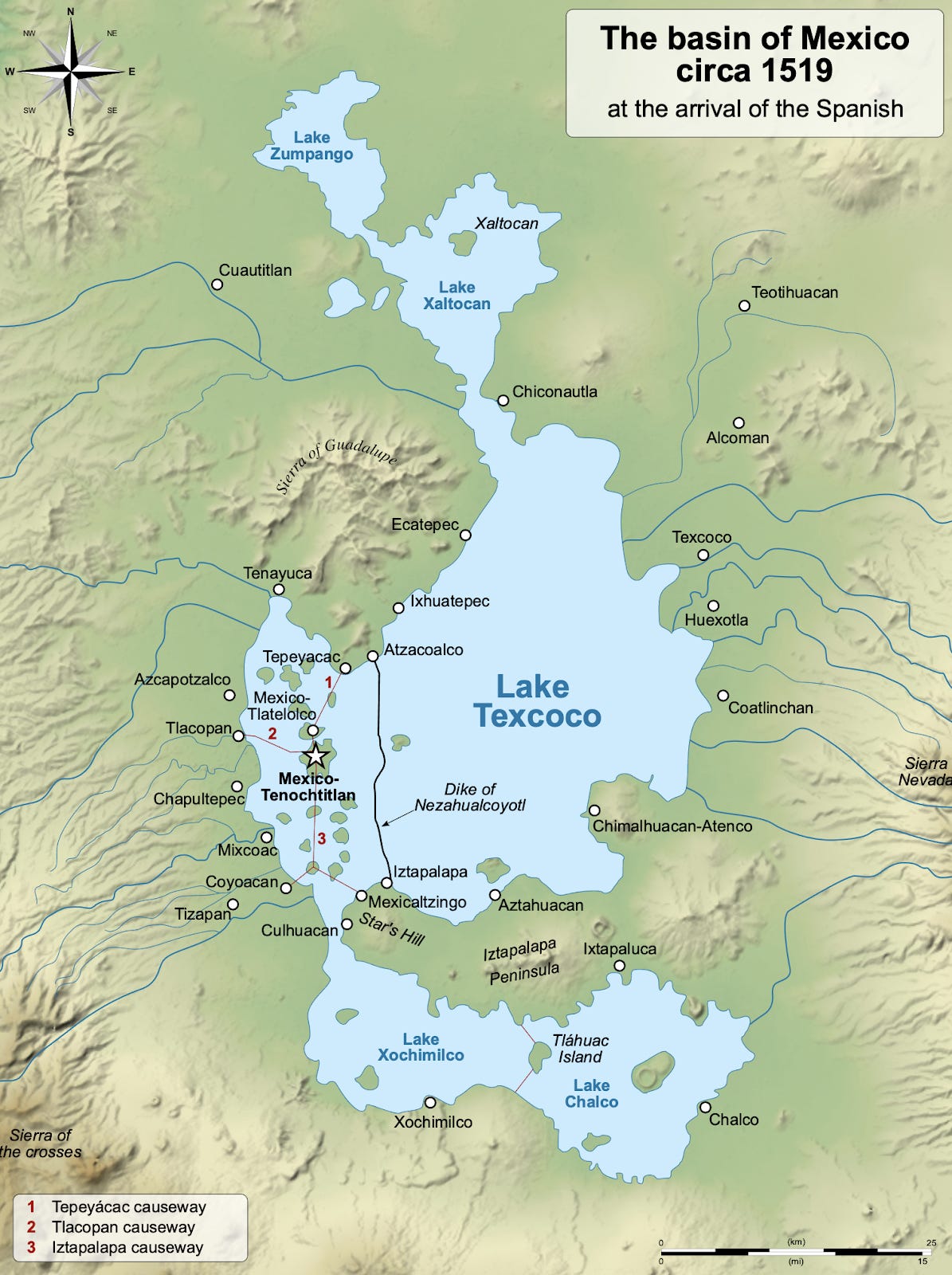
These early lakes followed the same principle as in oases.
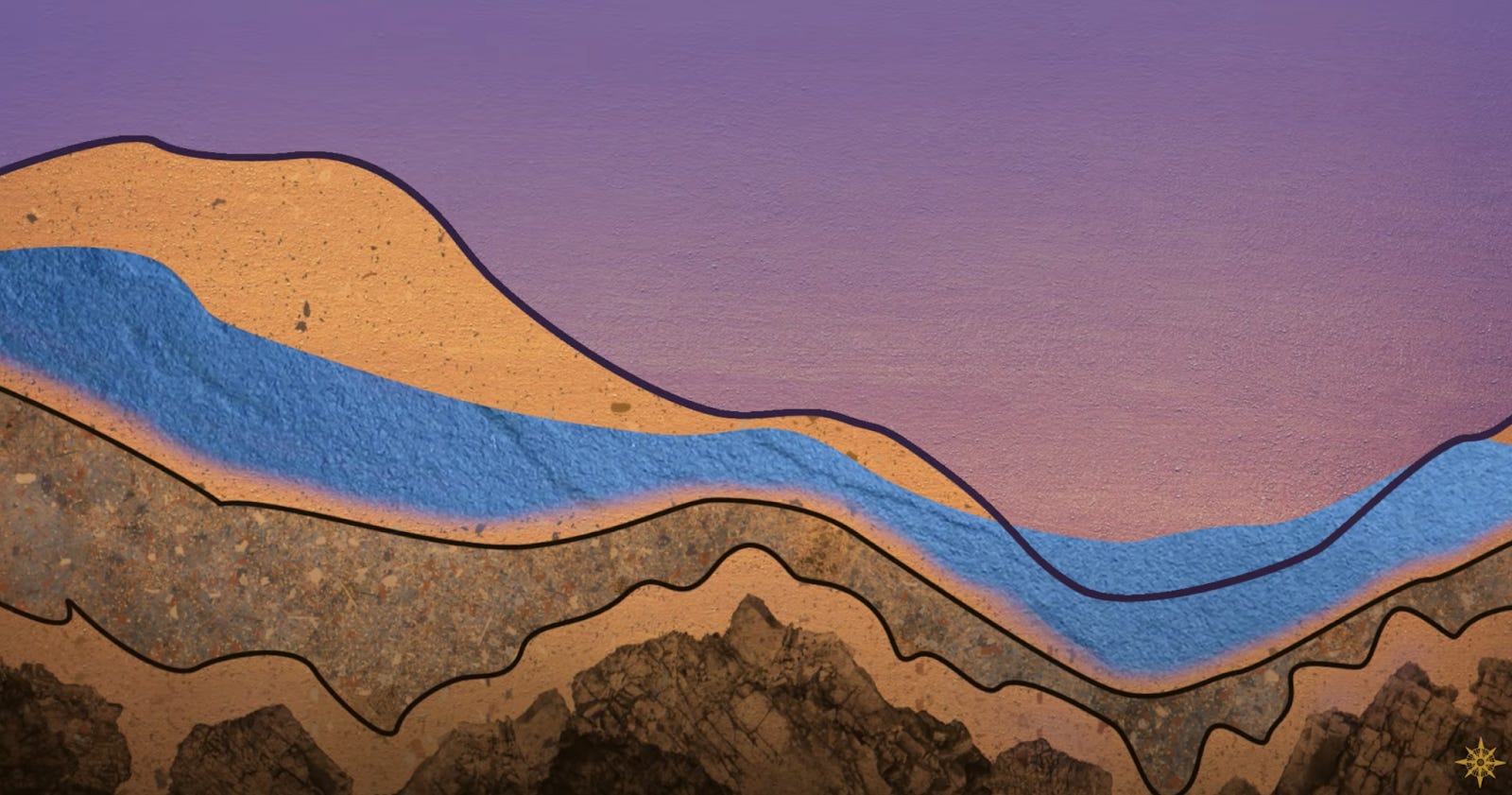
Oases gather water from a vast area around them, which moves towards the lowest point in the area. There, if the point is low enough, water appears above the ground.
But as Mexico City developed, it extracted water from the lake. The more development, the less water, until there was no water left.
Above the ground.
But below the ground, it’s all water. As CDMX grows, it extracts water from the ground to drink and irrigate. The ground sinks under less water and more weight from buildings and people and cars.
And the same happens around the world. Many cities are sinking, and in most cases it’s because they consume the water below. Jakarta, Shanghai, Tehran, and dozens of other cities suffer from the same plight.
Tehran, the capital of Iran, is especially interesting, because it’s very much like Mexico: a high plateau city surrounded by mountains. So the same dynamics happen in both cities: both have huge populations, had lakes before, pump drinking water from the soil, and have sinking cities. And both cities are highly polluted because all these people create pollution, but because the cities are surrounded by mountains, winds don’t easily blow it away.
What Conclusions Can We Draw for Space Exploration?
Thank you James Giammona for the insights on this section. More on it in the future!
1. Economics will drive space exploration
It was expensive to finance sea expeditions, or to trade between the colonies and the colonizing state. Only highly valuable items were worth the trips. With America, it was gold, silver, silks, pearls, sugar… What will it be for the Moon and Mars?
Unfortunately, the Moon and Mars are very poor for mineral extraction. This thread explains how poor the minerals of Mars and the Moon are.

What resources besides water and regolith are available on the Moon and Mars? It's easy to say something like: "all the same elements that exist on Earth exist there too, so we can extract them and make anything", but this isn't really the case.
In the Caribbean, when a settlement was too hard to maintain, it was abandoned. Why would you lead a hard life for no money when you could live more comfortably somewhere else? If the same happens in space, it’s unlikely that the Moon and Mars will be well settled. Unless we automate enough processes to make life easy there. Or if they have some function to support other parts of the system, like the Caribbean supporting the silver from Mexico or Cartagena de Indias.
2. If it’s too hard to bring to the Earth, we won’t bring it
While Mars and the Moon don’t have many minerals, the asteroid belt between Mars and Jupiter is full of asteroids with very valuable minerals. But going there is very expensive since it’s so far away. So we are unlikely to do it… Unless we figure out a way to mine cheaply. Maybe moving asteroids closer to Earth?
3. When capital needs are high, cheap labor is highly valuable
Will we see an equivalent of slavery but for the 22nd Century? What about poor earthlings that make a substantially higher income by taking the risks and doing the hard work of going to Mars? Will they be stuck there, at the whims of the companies that take them there?
4. If there’s colonization, there will be piracy
For colonization, you need valuable trade. And you can’t spend too much on defense, especially early on, because you don’t know the weakest points, and it makes the naturally inefficient early trade even more expensive. So there will be space piracy early on.
As the trade improves, the defenses will also improve, the pirates will modernize, and potentially join nation-states.
5. New polities will emerge
If it was impossible to keep American colonies tied to their European counterparts because of a few months of travel, it will be impossible to keep Mars and the Earth under the same countries given that conversations won’t be possible between the two (the distance forces a lag of several minutes), and travel between them will take six months, and will only be possible once every two years.
The Main Conclusion: Politics Follow Economics
I knew the Caribbean had a bad History of abuse from European colonization, but learning the details made me even sadder. What these nation-states did was terrible, causing so many tragedies for centuries at a time.
But I also don’t think the narrative of “Europeans were bad” to be the main takeaway. I largely think that humans are humans, and they react mostly to their environments.
When the Spanish, British, French, and Dutch went to the Caribbean and killed and enslaved, they were only the latest wave of that. It appears that the same process had happened a few millennia earlier: the Caribbean inhabitants of that time got replaced by people coming from the American mainland. And let’s not forget that across the Caribbean sea, at the very same moment when the Spanish were discovering America, the Aztecs were busy enslaving and sacrificing people from countless other tribes.
We like to think we’re above this, but I don’t think we are. Consider how we treat the meat we eat (if you eat it). Or how much we pay attention to the rights of disabled people. The way we disregard the rights of both and enjoy our lives impervious to their needs has a strong parallel with the way Western Europeans enjoyed sugar without too much consideration about slaves.
This is, in fact, one of the core lessons of these articles so far: in history, politics follows economics, and economics follows geography. Our responsibility is to avoid conceiving utopias that don’t respect economic principles. Those are destined to doom. Instead, we must create economic systems that thrive while optimizing for human well-being within the boundaries dictated by economics.