What You Want, Switzerland, and How to Become a 3D Conversationalist What You Want, Switzerland, and How to Become a 3D Conversationalist
Some content could not be imported from the original document. View content ↗
Premium Subscribers newsletter
2021年5月20日
∙ Paid
HI! Welcome to the first article only for premium subscribers. Today, we have three things.
First, I’m going to share the results of the poll on what themes are most interesting to you.
Second, Switzerland. Last week, after I posted the article “Geography Is the Chessboard of History”, the most common question I got was: “What about Switzerland? It has mountains yet is super rich.” Let’s address that. Many of you have asked me when I’ll cover more the theme of Geography, History and Technology. I’ll come back to it with much more detail in a couple of weeks.
Finally, we’ll finish the 3D conversations piece from earlier this week with the details of how to actually apply the concept:
How 3D conversations can help you achieve your goals.
How big groups affect 3D conversations.
How to become a 3D communicator.
Many more examples to illustrate these concepts.
I hope you enjoy it! Don’t hesitate to let me know what you think.
Poll Results
In the welcome email, I asked you to tell me what you were interested in. These were the results:
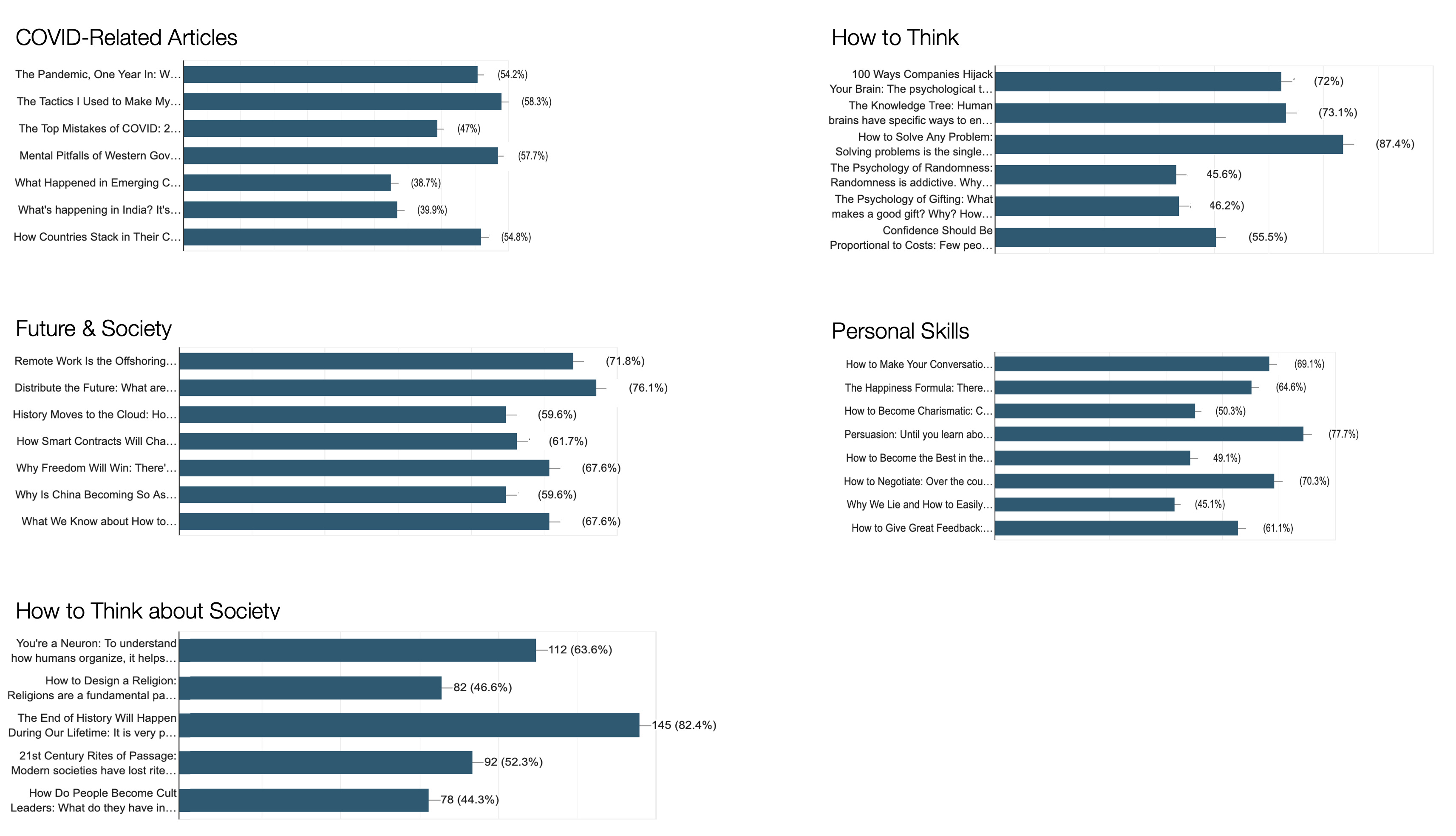
I also parsed your comments, and by far the one theme many of you wanted to add is Global Warming, so I’ve added it.
It takes me anything between one week and two years to publish an article. On average, I work on 10-20 articles in parallel at the same time. So it will take me a few weeks, but you should soon see some of the most demanded articles.
For example, the most demanded topic is How to Solve Any Problem. Luckily, this is something I’ve thought very hard about, and have a book draft on it. It will take me some time to revise and restructure it into a series of articles.
Conversely, remote work and the end of history are topics I’ve worked heavily and will be able to share soon.
I’m always open to your feedback, so feel free to reach out by leaving a comment or responding to this email!
Switzerland
Some of you told me:
“If mountains are so bad, why is Switzerland so rich compared to its neighbors?”
First: is it?
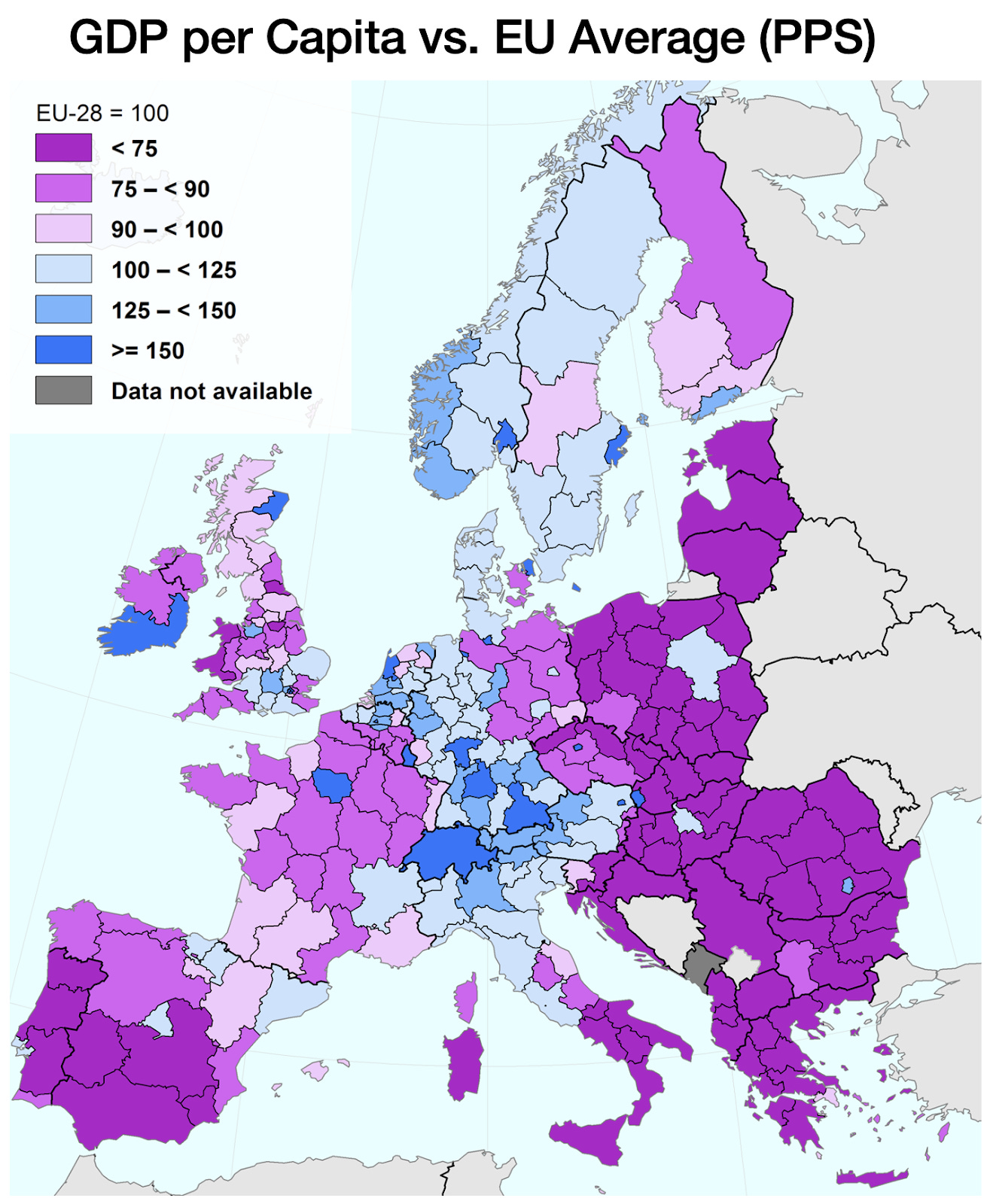
It is rich, but so is all Central Europe’s “Blue Banana”. Whatever is Switzerland’s miracle, its wealth can’t just come from its unique management. Moreover, it’s pretty recent:
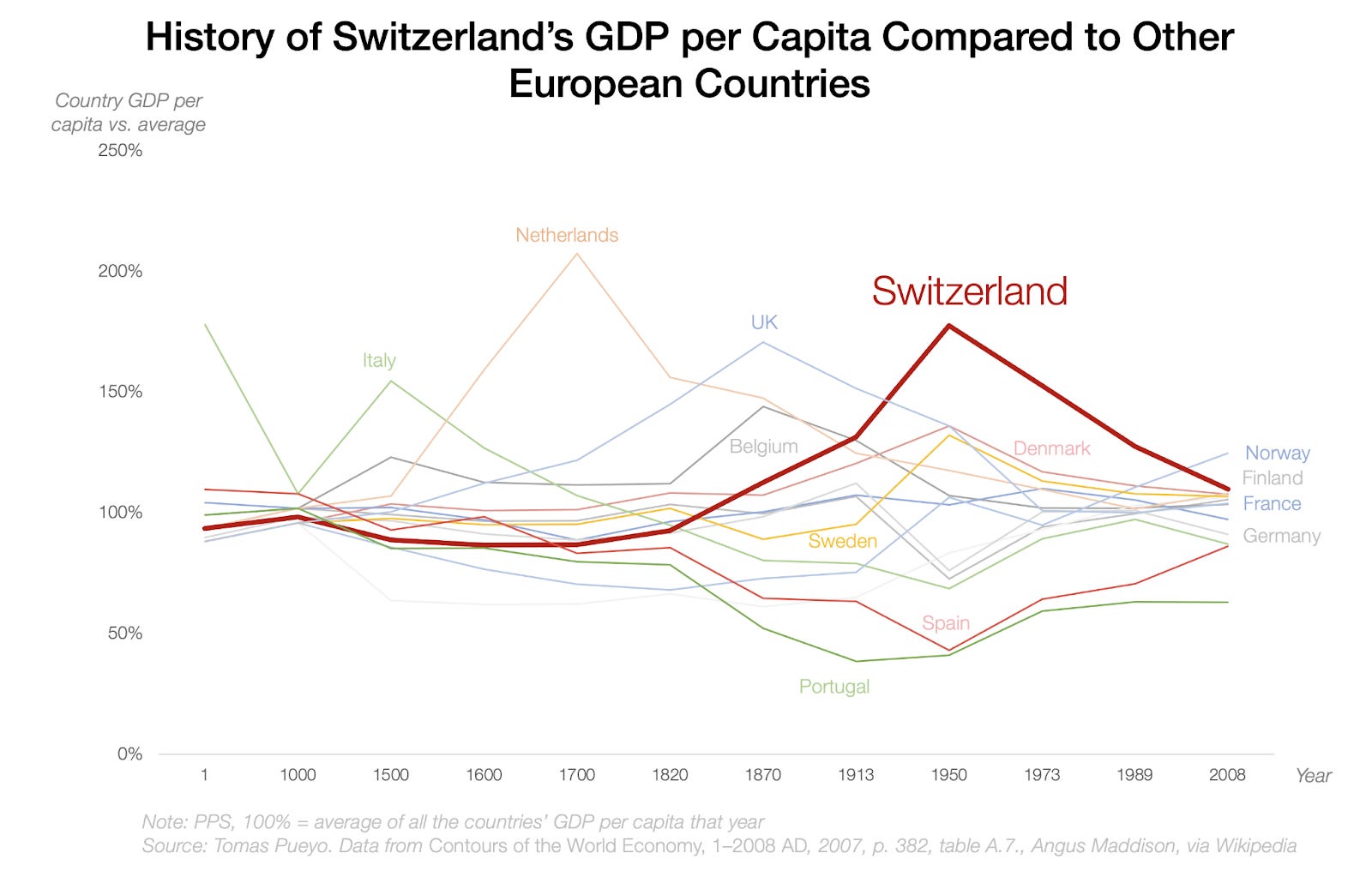
Until the end of the 19th Century, it was a pretty average country in Europe.
Note this graph shows GDP per capita. Since its population is the smallest of this group of countries, its total GDP is dwarfed by that of the other countries.
Nevertheless, the question stands: How is Switzerland so rich—per capita—with so many mountains? I’ll let you make a guess. Here’s its topography. Where do you think its wealth lies?
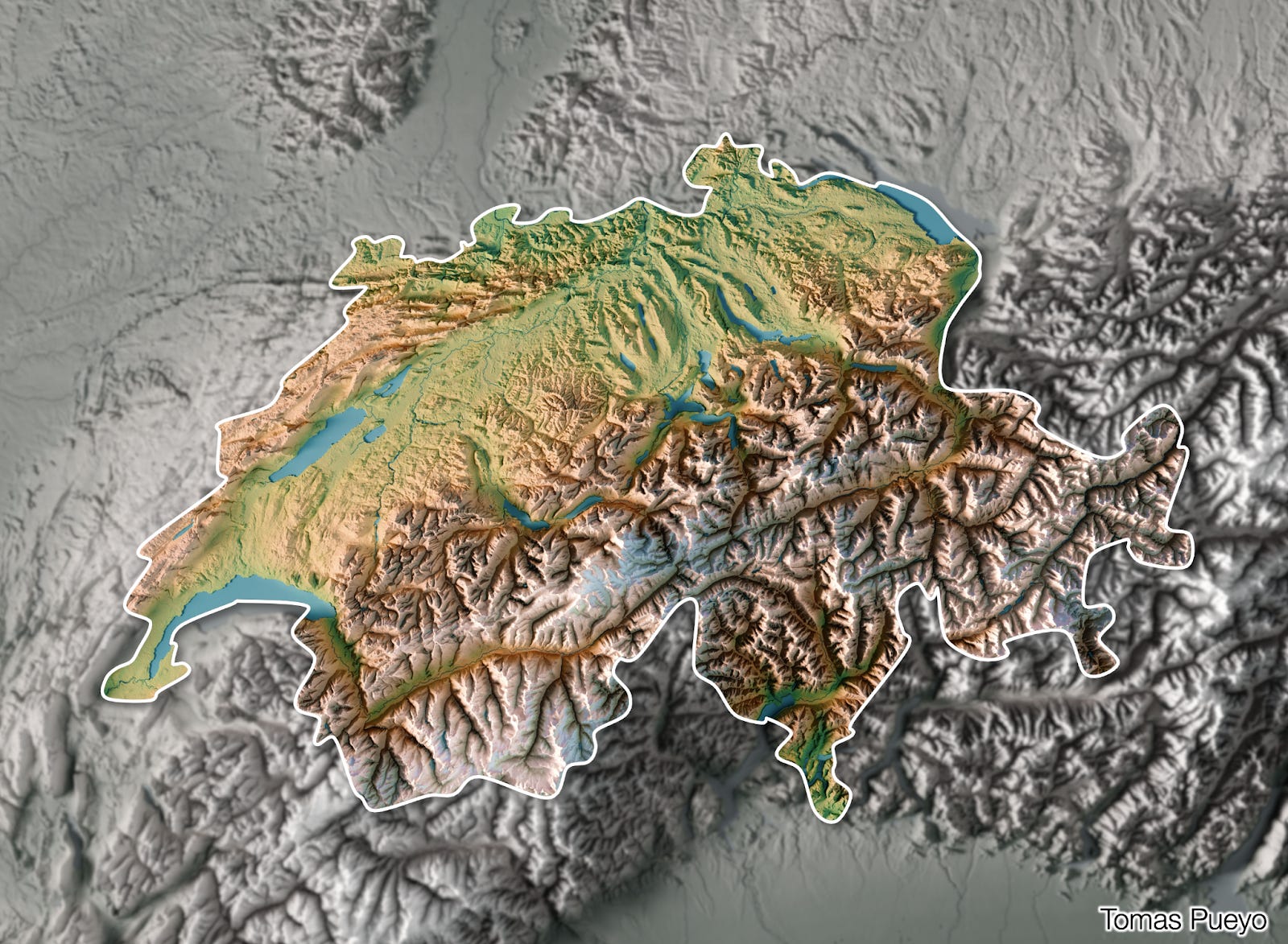
You probably guessed right. The wealthy part is the plateau that goes from West to North. That’s absolutely right.
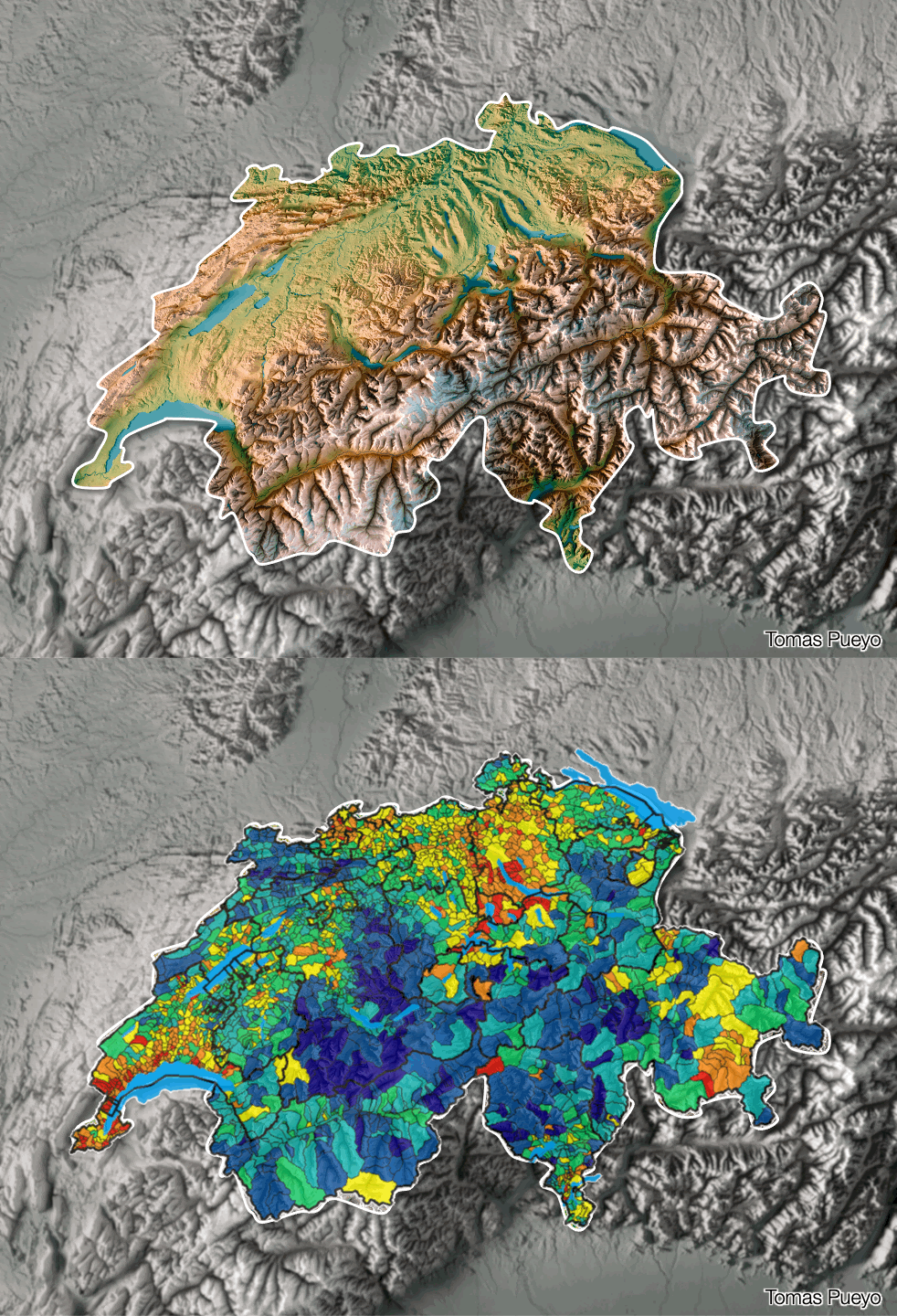
Where there’s lots of high mountains, Switzerland is poorer. Agriculture, people and wealth concentrate in the northwestern plateau—called “Mittelland”—especially along the lakes and rivers, and independently from whether they belong to the French, German, Italian or Romansh influence areas. The logic of plains, rivers and mountains stands.
In my biased mind, this speaks to the power of this theory: I didn’t know about the Mittelland until I read about Switzerland, but that’s exactly the type of thing the theory predicts.
But we still don’t have an answer! Sure, it has a flat plateau that is very well irrigated and has navigable waterways. That creates wealth. Is that all the only reason why Switzerland is so rich? Of course not.
The main reason why Switzerland is rich and independent is because it’s in the middle of a mountain range that divides regional powers.
With so many mountains, it’s not easy to conquer. With little fertile land, it’s historically not very valuable for food and a big population, and can never become a big enemy. High cost and low benefit of conquest, plus not a threat, means it’s not worth conquering. It h
But it’s valuable as a buffer state, stuck between France, Italy and Germany (and, earlier, the Austro-Hungarian Empire). That’s why its neutrality was guaranteed in the Congress of Vienna, at the beginning of the 19th Century, after the Napoleonic Wars.
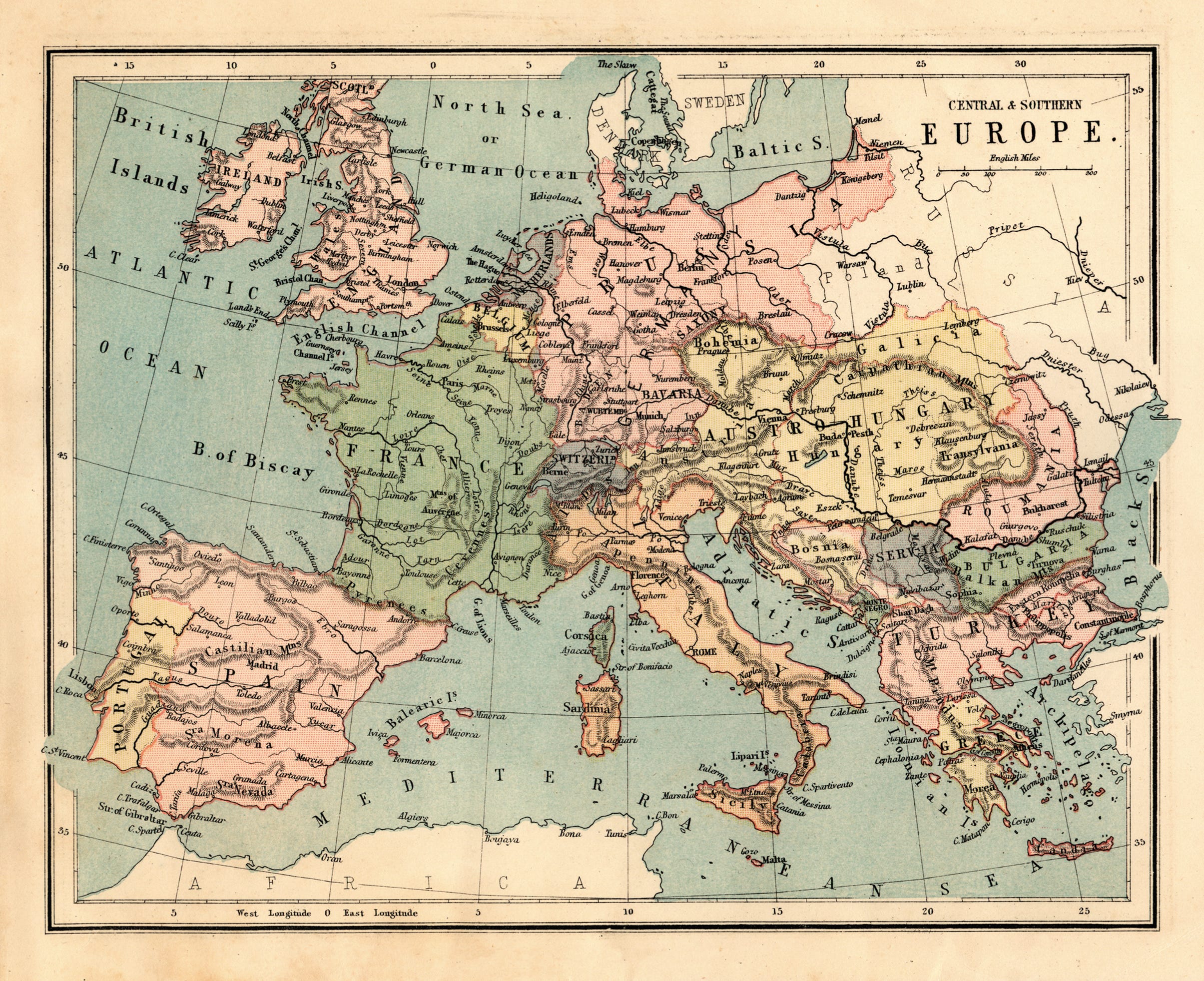
It was convenient for all these powers to have this land controlled by a small, weak, neutral state that couldn’t threaten anybody. If any of the powers took it, the others would immediately feel threatened and it would cause war.
Note that it’s not like these powers were scared of losing against Switzerland because of its impregnability. Operating in the mountains is hard, but the country is weak. In fact, the one time the country was invaded—by Napoleon—the French victory was quick.
That buffer position allowed it to avoid most wars, including both world wars. That made Switzerland richer than its neighbors: no destruction and plenty of wealth finding refuge there (or simply stolen).
Another way it benefits from its central position is through state parasitism [1] : taking advantage of being a small country close to big countries. This is most obvious by taxes: Switzerland’s low taxes attract people from neighboring countries, reducing the income of the neighbors but increasing Switzerland’s. The neighbors can’t do it, because lowering taxes would just lower their income, as they can’t suck lots of taxpayers away from a bigger neighbor.
Unsurprisingly, it’s not the only country that has followed the same path.
Mountain buffers exist elsewhere in the world. Nepal and Bhutan fulfill this role between China and India, for example. Caucasian countries like Armenia, Azerbaijan or Georgia buffer Russia, Turkey and Iran. In Europe, Andorra and Liechtenstein have done exactly the same as Switzerland, with exactly the same outcome: all three are rich, mountain-based tax havens. These, by the way, indicate a path for development for Nepal and Bhutan.
So, in summary:
Switzerland is poor where it has mountains and rich where it as plains with lots of water and navigable waterways
It’s rich also because of its relatively poor, mountainous land in the middle of much bigger, more fertile areas: That bestowed it a buffer status from which it can benefit as a state parasite.
The same pattern is repeated elsewhere. In Europe, in Andorra and Liechtenstein. Other mountain buffers can be found elsewhere, in the Caucasus or the Himalayas.
Geography still is the chessboard where History unfolds.
How to Become a 3D Conversationalist
Parkinson’s law. Tasks will expand to take the allotted time
Two days ago, I explained what 1D, 2D, and 3D conversation is. Today, we’re going to look at it from different angles, to fully grasp the concept and figure out how to apply it.
Reminder
Here’s a quick reminder from the last article:
1D conversationalists stay in the present of a conversation.
2D conversationalists remember the flow of the conversation, where it branched out, and can backtrack into some of these branches.
3D conversationalists keep in mind the entire flow of the conversation, both past and future, to harness and direct it.
Why Aren’t We Natural 3D Conversationalists?
Given that 3D conversations sound so valuable, you’d imagine we would have evolved to be great at it. Instead, it’s really hard to keep in our minds both the normal level of conversation and the meta level. Why?
We Didn’t Evolve to Be Productive in Conversations
We think conversations are about exchanging information and solving problems. That’s not true.
In The Elephant in the Brain, Kevin Simler and Robin Hanson explain that our speech hasn’t evolved primarily to solve problems, but rather to gauge who is a potential ally. The person who has the most interesting things to say about any given topic is the best potential ally because he might have useful information in a variety of situations.
One-dimensional conversations are great when you’re hanging out with friends. But if you’re trying to be productive, you can’t just follow where the conversation takes you.
Whenever somebody speaks, we listen to see how well-equipped their brain is. If they can say lots of things about lots of topics very gracefully, we think they are amazing. Conversely, if they refocus the conversation toward achieving a goal, they don’t manifest as much breadth or grace. They are also correcting the flow of the conversation partner, both preventing them from showing off their own conversational breadth and grace, and appearing to be a bad potential partner.
Unfortunately, demonstrating eloquence and wit are not conducive to solving problems. Now we live in a world where we need to problem-solve all the time. If you want to be productive, you need to actively decide to become a 3D conversationalist.
Let’s Take and Example
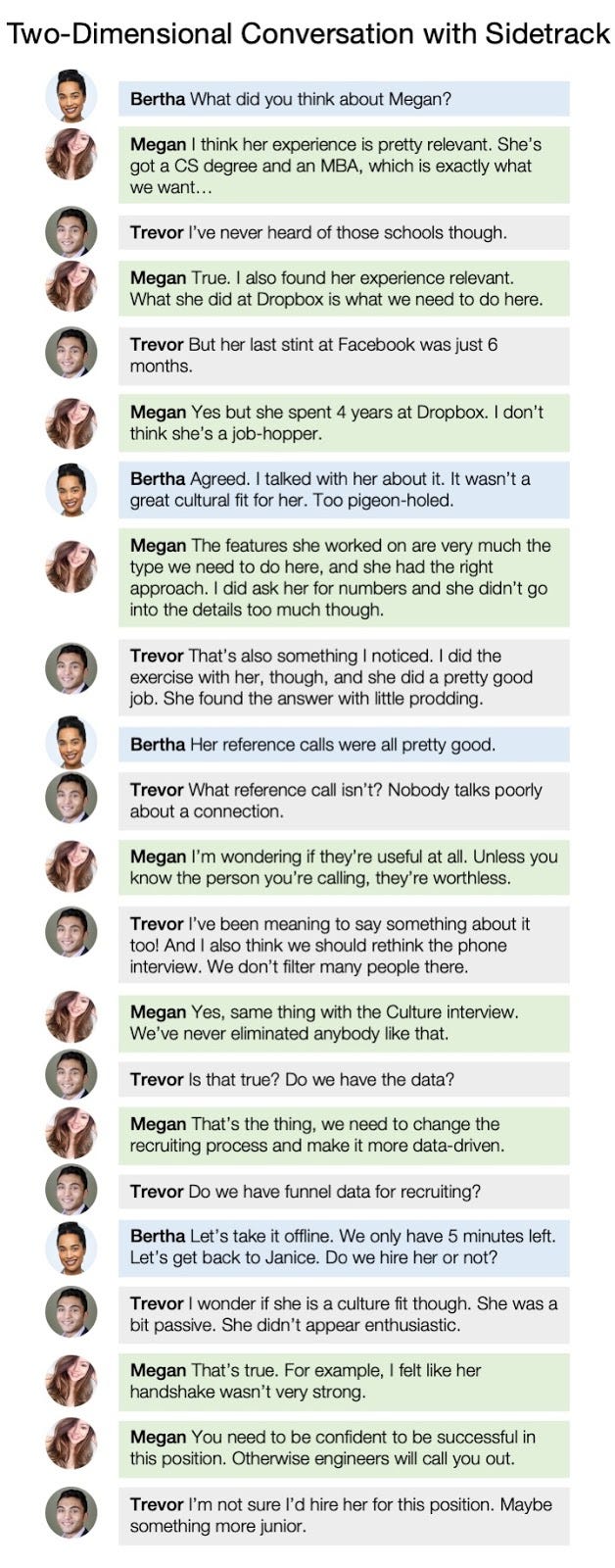
If you remember from the previous article, there was a recruiting conversation that got ratholed. Let’s analyze what it would look like if it had been a 3D conversation. Here’s the 2D version, for reference:
Bertha’s Mistake
Despite Bertha’s ability to reroute the meeting, she still wasted a lot of time. Also, you might have noticed that the end of the conversation might have reached the wrong conclusion about the candidate, Janice…
Because of the rat-hole, the team couldn’t spend all the time they needed on Janice. They then quickly touched on the last theme—culture fit—in a way that was biased and irrelevant, but by then the earlier conversation wasn’t as fresh. Nobody made the effort to remember the many positive points that had been said about her earlier on, so in the end, they did not make an offer.
Beth should have cut short the complaints about the interview process much earlier. She should have taken a step back and qualified the culture fit conversation as irrelevant. She should have gone back to the earlier points made about the degree, professional experience, exercise and reference calls, summarizing them.
This is what the conversation would look like once she develops her 3D conversation skills.
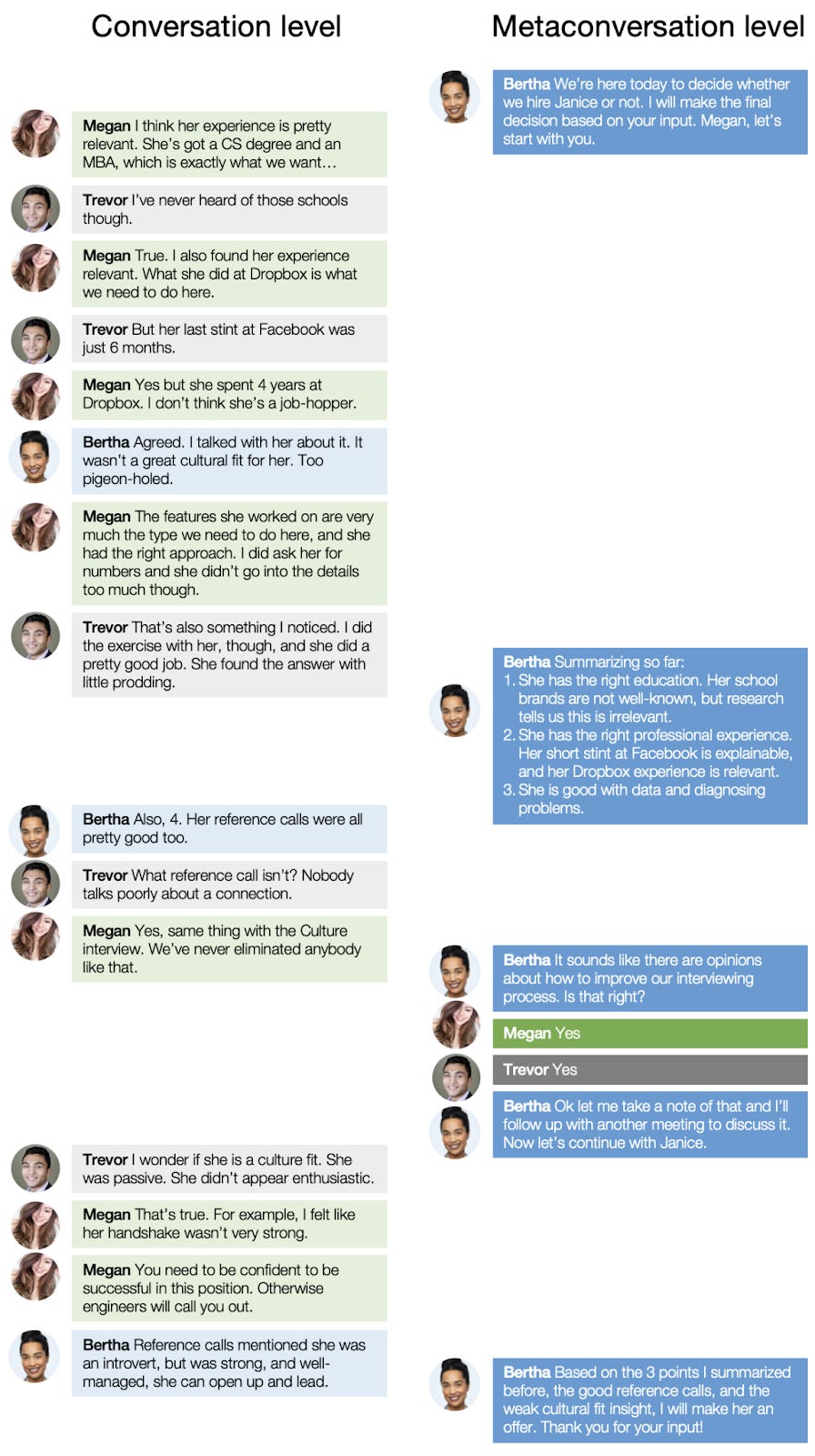
Notice how the conversation is happening at two levels: The standard conversation level, on the left, is about Janice. The meta-conversation [2] , on the right, is not about Janice herself but rather about the conversation itself. The meta-conversation:
Defines the problem early on, which is a very 3D thing to do because it prevents sidetracks.
It summarizes, to make sure people heard the same thing.
As the conversation unfolds, the meta-conversation monitors the conversation, and as soon as the conversation appears to go on a tangent, the meta-conversation redirects it.
The meta-conversation keeps tabs on new threads that require follow-ups. In this case, the interviewing process.
It makes sure people feel heard in their concerns—even if they’re not related to the task at hand.
The meta-conversation stops a sidetrack as soon as it starts, keeping the conversation productive.
Finally, it summarizes everything that was heard, to make sure nothing was left out, the right decision is taken, and the goals are achieved.
Why 3-D Conversations Help You Achieve Your Goals
You can imagine how powerful this is for productivity:
You don’t miss any key points.
You always remain on topic.
You remember the relevant information to solve the problem you were tackling.
You collect other threads that require attention.
People feel heard.
The benefits of 3D conversation go beyond productivity. Once you are a 3D communicator, it’s like you’ve awakened from a dream in which you followed the motions, unaware that things are happening to you rather than because of you. You now understand the nature of the conversations and can manipulate them.
Every conversation is a flow to be shaped, not a current to be dragged by. Armed with this knowledge, you can take control of your life.
How to Become a 3D Communicator
It’s not easy to be a 3-D communicator. We haven’t evolved to do that well. It requires a constant effort to fight against our primal urge to react to what we just heard rather than to stay focused on the big picture.
It’s also hard, because it shifts your perspective from being constantly in the moment, to suddenly loading up your brain with a record of the conversation, highlighting the key moments. You also have to assess every statement at two levels: what is being said, and how it fits into the conversation.
It might make sense to start as a 2D communicator.
2D communicators steer the discussion through the right paths at the conversation’s crossroads. Here are some of their favorite expressions:
Why were we talking about this? Oh yes, I remember ...
Shifting gears a bit ...
Going back to ...
This reminds me of this other thing we were saying earlier.
We’re rat-holing here.
Let’s table this for now.
Let’s take this offline.
Once you get the hang of this, you can try moving into a 3D world.
3D communicators are not just going back and forth sometimes during the conversation, picking the right paths. They map the entire discussion, even before things are said. That means they’re constantly saying things that are not just relevant to what is discussed, but also to how it’s discussed. Here are a few rules of 3D conversations:
1st rule of 3D conversations: Always know your goal
9 times out of 10, people *think* they agree on the goal of a meeting, but don’t. They have slightly different understandings. That leads them to try to solve for different problems.
So at the beginning of every meeting, state clearly the goal to be achieved. Ideally, write it down in front of everybody. Keep it in mind, and go back to it whenever needed.
When a meeting is blocked, one of the things I like saying is: “What are we optimizing for?” 75% of the time, it unblocks the meeting.
2nd rule of 3D conversations: Don’t say what comes to your mind
If you do, the conversation will be haphazard. It will take random turns. If you’re in a social setting, enjoying the conversation for its sake, that’s great. It’s like taking a side road full of twists and turns. It’s not fast, but it’s enjoyable.
A 3D conversation is like a German Autobahn. You can go very very fast in a straight line, but you need to be very careful where you’re going and keep your eyes on the road.
When somebody says something, we tend to react to what they just said. If we disagree with the last sentence, we will jump on it. Instead, ask yourself: How does that statement fit in what we’re trying to decide?
3rd rule of 3D conversations: Paraphrase
Many times, we *think* we understood what somebody else said, but 80% of the time we didn’t exactly understand, and in fact we missed the very nuances that matter most.
The best way to make sure we understood—and, at the same time, show the others that we did understand—is to simply paraphrase what they said. I do this 4-5 times in every 1h conversation.
4rd rule of 3D conversations: Zoom in and out and make it explicit
Sometimes, you need to go into the detail. Make it explicit so all know why you’re moving the conversation in a certain direction:
“It sounds to me like we can break this question down into 3 different questions.”
”Let’s discuss this first, and then we’ll discuss these other topics.”
”Let’s double-click on that.”
”Let me go down this path for a few seconds and then we’ll go back to the main topic.”
”This might sound like a rat-hole, but it’s important to the decision.”
Other times, you might need to zoom out:
“Let’s take a step back.”
”The reason why we’re discussing this is X.”
Qualify what you’re saying, so people understand the function of what you just said:
I’m about to touch on a topic that sounds far away from what we’re discussing, but in a couple of minutes I’ll come back to this and answer your question.
“I’m thinking out loud.”
”Take what I say with a grain of salt.”
”I’m only 70% confident of what I’m saying.“
Genevieve Conaty, one of the best design leaders I’ve ever worked with, is a superhuman 3D communicator. This is what her desk area looks like at the end of a meeting:

Every time an interesting sidetrack appears, or when she thinks of something new, she takes a note. She then organizes them in real time. Sometimes, she pursues some of the themes immediately. Other times, she takes a note of the sidetrack while redirecting the conversation. Each of the yellow pages is a different thread. The green post-its have the most important topics she wants to keep in mind.
This is much easier if your desks or meeting rooms have post-its and pens. In a remote world, you might just have a notepad or note-taking app open on the side instead. Whenever a sidetrack appears, you can take note of it instead of engaging with it or losing it.
I love her system, but it’s not the only one that works. Have you seen a system that works? What did it look like? Leave answers in the comments.
Interesting Consequences of 3D Conversations
Consequence 1: Never finish a meeting on time
Work expands so as to fill the time available for its completion.” Parkinson’s Law
A corollary of Parkinson’s Law is that if a meeting takes exactly the allotted time, you likely failed.
What’s the likelihood that a meeting takes exactly 30m? 1 hour? It’s either too long (you should have been more efficient and finish it earlier by being a 3D conversationalist) or too short (there’s plenty to discuss and the allotted time was not enough. You need to ideally continue, and if you can’t, follow up).
Consequence 2: Meetings should be small or have hardcore 3D facilitators
The more people are in a meeting, the more people can come up with unrelated or unhelpful ideas, and the more likely the conversation will go nowhere. In larger meetings, people can latch on to different parts of what has been said and steer the entire conversation in their preferred direction.

A small team can afford these meanderings because even if everybody sidetracks, there are still only a few directions to go. Also, team members feel intimate enough to stop a rat-hole.
But bigger teams have more people to lead them astray and less intimacy to rein them in.
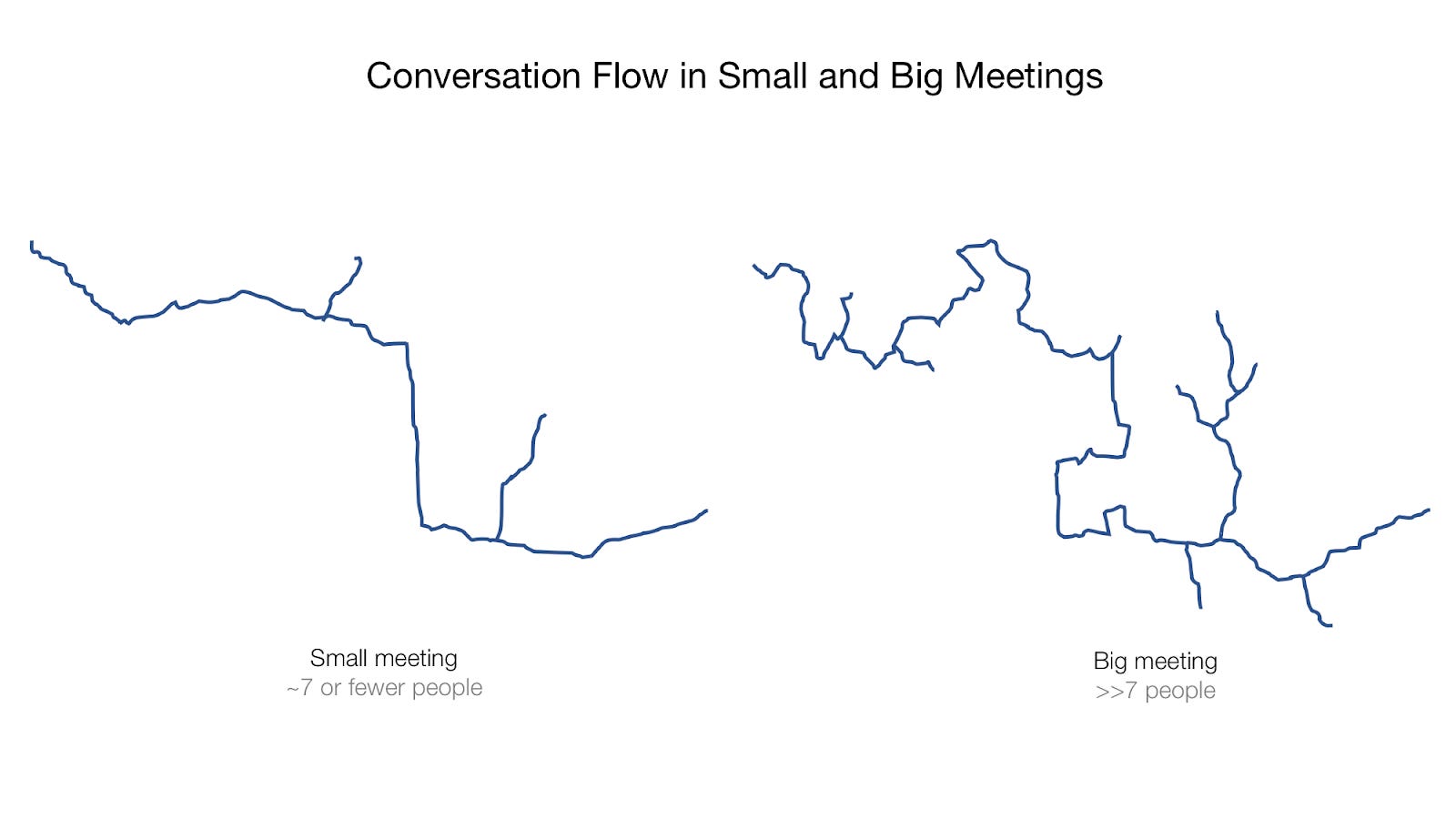
The smaller the meeting, the less you need to manage the conversation. The bigger the meeting, the more you need to, to avoid sidetracks. Here are some tools to avoid them:
Require some people to be observers.
Have as many 3D conversationalists as possible among speakers.
Have a few 3D communicators, but only ones who have the will, power, and skills to shepherd the conversation.
Takeaways
We all use 3-D communication sometimes—usually, not enough. So how can you become a better 3-D communicator?
The key is one simple word: why.
Why are we gathered here today?
Why is she saying what she’s saying? Does it tie back to our goal?
Why is he asking this? What are his underlying goals?
Why do I want to say this thing? Is it because it pleases me, or because it does build up to solving our goal?
The 3-D communicator always assesses not just what is being said, but also why it’s being said.
It’s not easy to be a 3-D communicator. We’ve not evolved to do that well. We’ve evolved to show off in conversation instead.
As a result, you need to train your brain to stop trying to show off in conversation and instead to pay attention not just to what is being said, but also why it’s being said. You need to remain at the conversation level and the meta-conversation level, analyzing where the conversation is coming from, and where it’s going.
The more you do that, the more you will be a 3-D communicator, and the more productive you’ll be.
I don’t mean it negatively. I’m not saying Switzerland is populated by parasites. Quite the opposite, I love the Swiss. I mean it in the literal sense of the word: Switzerland benefits by extracting value from its bigger hosts.
Meta-conversations, or meta-discussions, are vastly understudied. A huge chunk of our thinking and information exchange is through conversations, yet very little has been studied on it. In fact, the term meta-conversations is mostly used to refer to broad discussions about how two people tend to talk: the rules of engagement, the bad habits, etc. Here, I’m adding a different meaning to meta-conversations: The internal processes that go through your mind during a conversation that analyze the flow of the conversation and try to optimize it.